[00:00:05] Jane: Welcome to the newly branded Jane Healey Happy Hour, formerly Historical Happy Hour, the podcast that explores new and exciting novels of all genres.
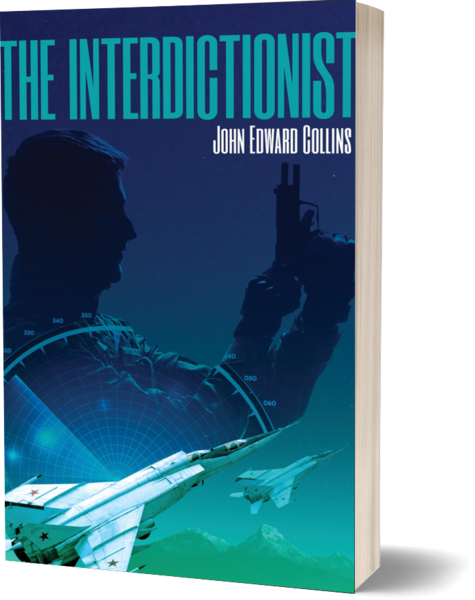
[00:00:13] Jane: I’m your host, bestselling historical fiction author Jane Healey, and in today’s episode, we welcome author and US Air Force veteran John Edward Collins to discuss his novel, The Interdictionist, which has been called a Cold War military thriller packed with tactical realism, emotional depth, and a hero you won’t forget.
[00:00:31] Jane: Welcome, John.
[00:00:32] John: Thank you very much.
[00:00:33] Jane: Thanks for coming on. Um, I’m gonna do a quick bio about you, and then I have probably too many questions than we have time for, but we’ll see how it- how it goes. All right.
[00:00:41] John: Yeah, thank you.
[00:00:42] Jane: In 1969, John and his wife traveled to West Germany courtesy of the US Air Force, where he served as a military operative for the NSA.
[00:00:50] Jane: Rising to the rank of staff sergeant, he worked as a cryptologist, signals intelligence analyst, and computer programmer. His wife worked for the Stars and Stripes newspaper. While not at work, they traveled extensively in Europe, using Darmstadt’s central location as their base. Upon completion of his four-year enlistment in the Air Force, the training he received led to a civilian career as a computer systems architect.
[00:01:14] Jane: He still regards his experience working for the NSA as the most challenging and exciting career e- exciting… challenging and exciting in his long career. Again, welcome John, um, and let’s dive in to the questions about The Interdictionist, and then I have some questions about just the writing life in general.
[00:01:31] John: Okay, thank you.
[00:01:32] Jane: Yeah, so talk about the premise of this and what inspired you to ultimately write it.
[00:01:39] John: I retired 13 years ago from my career as a computer system architect, and one day I picked up a photo album that my wife and I had put together of snapshots of the three years we lived in Germany during the Cold War.
[00:01:56] John: And I started going through it, and suddenly I started thinking about all the things that happened to us while we were over there, and I said, “I gotta take some notes about this.” So I started writing my impressions from the photographs, and about four months later I had 240 pages of memoirs of the three years in Germany.
[00:02:23] John: So I cleaned it up a little, and then because of my oath of secrecy, I had to- Send it to the National Security Agency for pre-publication review. Uh, they got back to me and advised me to change my writing into a novel to protect the people, places, and things that I had written about in the memoirs.
[00:02:45] John: Keeping in mind this is like 50 years later, they still were concerned about the secrecy of the events and things that I, I was involved in. So I’d always been a non-fiction writer writing for my projects that I managed as a computer scientist, and, um, writing fiction was something that- of a challenge for me.
[00:03:10] John: So I started studying how to write fiction using my memoirs as a resource. I converted my memoirs into The Interdictionist, and The Interdictionist is a journey or an odyssey of an airman from jungle warfare to cyber warfare
[00:03:33] Jane: It’s so fascinating. Fascinating about how you had to still go back to e- the NSA after all this time.
[00:03:38] Jane: Mm-hmm. I find that so interesting. Um, so explain, um, the title is intriguing, The Interdictionist. Explain in, from a military context what that is. Yeah. And, and, and also in terms of the protagonist J- Jay Crowley’s journey.
[00:03:51] John: Yeah, I get that question a lot. My publisher advised me to change, my working title was, uh, Fox Bat Out of Hell-
[00:04:00] John: dealing with the NATO code name for an aircraft that, um, is, has a prominent role in the story. So, uh, I had to think about one that related to the protagonist instead of the airplane. So I came up with The Interdictionist ’cause interdiction in military terms, I’ll give you, I’ll explain it by example.
[00:04:24] John: When fighter jets come up to intercept a bomber formation that’s heading to bomb a strategic location, and they stop him, stop that, um, bomber formation from completing their mission, that’s an interdiction.
[00:04:41] Jane: Okay. Yeah. And so, uh, so um, I wanna talk about Jay Crowley and the whole kind of narrative arc.
[00:04:50] Jane: This takes place starting in 1969, and Jay Crowley is an Air Force combat controller.
[00:04:57] John: Mm-hmm.
[00:04:57] Jane: Um, y- I mean, uh, one of my questions was you’ll c- talk about your research for this novel. It sounds like it’s, it’s s- pretty biographical and, and like, uh, based on a lot of your own experiences. Did you have to do some additional research beyond that?
[00:05:09] Jane: Or did you base it from your, your whole kind of career and experiences working for the Air Force?
[00:05:16] John: Well, like Hemingway said, “Write about what you know, and write truly.” So the major portion of the work is based on my experiences as an intelligence analyst. But I was in the Air Force, and the intelligence I did was in front of a air- aircraft tracking controller position.
[00:05:38] John: So it was the same position that an air traffic controller would use to, um, control traffic in his airport. But I was looking at, from the East Block countries to s- the Soviet Union, the traffic that w- was being tracked by the Soviet Union. My team was intercepting their traffic, and we were displaying it on the screen, and I was reporting to the NSA, and at sometimes to the situation room in the White, in the White House- Wow
[00:06:09] John: activity that was going on during the Cold War.
[00:06:12] Jane: Amazing.
[00:06:13] John: And the air traffic controller- Expertise is the main skill of a combat controller. And what I was trying to do was contrast a combat controller’s job in conventional warfare with an intelligence analyst’s job in cyber warfare. ‘Cause our unit, the security service, was the basis of today’s, uh, 16th Air Force, which is the, the cyber command.
[00:06:45] Jane: Okay. Fascinating. Um, so this story, al- although Jake Ca- Crowley is the main character, it really, like, it spans the globe, like locations, perspectives. It’s not just his story. Uh, and so it’s, you know, you go from… I mean, not, this isn’t even all the places it, that it takes place. Honduras, New York, Moscow, Germany.
[00:07:08] Jane: You know, it, it includes the perspective of Jake’s fiance. Did you always plan on structuring the narrative that way? ‘Cause I was like, oh, gosh, for a debut, like, this is ambitious. I like I’m still, like, pretty much a one perspective girl. And so- Mm-hmm … I’m, I’m curious what, why you made those choices.
[00:07:25] John: Well, I had, um, dueling main plots when I first wrote it. I had the plot of the cryptologists breaking into the Soviet Union’s air defense network and discovering secrets that they were trying to hide, and reporting on them. That was one plot. The other plot was the combat controller becoming a intelligence analyst, and also being assigned other duties as a military police auxiliary, and that led to an exciting espionage plot in the story.
[00:08:06] Jane: Mm-hmm.
[00:08:06] John: And I had to decide as I went along which was the main plot and which was the minor plot. So I made the action the main plot, and still that allowed me to describe what I did as a intelligence analyst along the way, you know, and, uh- Yep, yep … it contributed to it
[00:08:28] Jane: Very cool. So you sent me a letter along with your book, and I loved learning about your own family’s military history.
[00:08:36] Jane: Um, will you share some of that with the audience? ‘Cause it’s so interest- it was so interesting to me, and it was like history repeating itself in some of your- Mm … family stories.
[00:08:45] John: Okay. I was prepared for that.
[00:08:48] Jane: Oh, good. Can you,
[00:08:48] John: can
[00:08:48] Jane: you
[00:08:49] John: see, can you see this picture?
[00:08:51] Jane: Yes.
[00:08:52] John: Okay, that’s my father at 24 just before World War II.
[00:08:57] John: He’s a staff sergeant in the Army Air Corps in the Signal Corps division. He was combat intelligence commando during World War II under Patton. Wow. Okay, so he’s 24 years old, staff sergeant, okay?
[00:09:16] John: And here is me- … 24 years old, as a staff sergeant in the Air Force, holding my daughter, who was born in Germany serving at that time in Augsburg. She was five months old.
[00:09:29] Jane: Wow, that’s amazing.
[00:09:31] John: That’s one pattern. Now-
[00:09:33] Jane: Yeah …
[00:09:34] John: my daughter was born in the same hospital in Wiesbaden, Germany, Air Force hospital, that my sister was born in.
[00:09:42] Jane: Wow. So- Incredible. Yeah, yeah.
[00:09:45] John: And then, um, on top of that, when I went into the Air Force, the first thing they sent me was back to my birthplace in San Antonio, Texas, for basic training.
[00:09:57] Jane: For training.
[00:09:58] John: Yeah. Yeah, yeah. And then to San An- San Angelo, Texas, for technical school in, in cryptology. And, uh, then to Germany, and Darmstadt, where I was stationed first, was the birthplace and home of my great-grandmother.
[00:10:17] John: She- Oh, re- okay.
[00:10:19] John: Yeah … she immigrated from Darmstadt to the United States.
[00:10:24] Jane: I wonder what she would have thought about all of that. That’s a, that’s incredible. Yeah.
[00:10:29] John: Yeah. So, uh, one of the things I noticed with, uh, from working with cryptologists, and I find this also in musicians and, and, um, mathematicians, they have a keen sense of pattern recognition.
[00:10:45] John: And, um, that’s what I f- found myself doing in discovering all these relationships and, and, um, recurrences, you know-
[00:10:57] Jane: Oh, yeah …
[00:10:58] John: that have happened in my life.
[00:11:00] Jane: Absolutely. Yeah. No, thank you for sharing that. It’s so interesting. Another family-related question. Your wife, Mary Ann, worked for- Mm-hmm … the Stars and Stripes newspaper.
[00:11:10] Jane: Mm-hmm. Your book is dedicated to her. How much of this book was a collaborative project? Or and how much of… did she, was she your editor? Did she have input along the way? I don’t let my husband read any of my books until they’re, like, almost baked, so I’m just really- Mm … curious to see, like, if she had a lot of input into the story.
[00:11:28] John: Well, as I wrote in my dedication, she was my muse. Nice. And, um, we were, um, w- w- we were married in 1969. I was on leave, and we had arra- pre-arranged this, and we had a wedding on Long Island. Then we flew to Bermuda for our honeymoon, and then we got separated for a few weeks while I went to my assignment in, in Darmstadt.
[00:11:56] John: And, um- I had to make arrangements before she was allowed to come over to have an apartment and transportation, a car. So I scurried around. I, I speak German and was able to expedite it and get it done so that she came over Christmas Eve. Oh, perfect. That’s what started our three-year tour there. And, um, first thing she did, ’cause she didn’t wanna stay around the house, the apartment, was, um, get a job at Stars and Stripes newspaper with the controller’s office.
[00:12:30] John: She had been a, um- they call it a platform executive at a bank on Long Island, and she was bonded, insured. So they took her right away and made her a, an employee in the, uh, controller’s office. And there she met all the reporters and staff members of Stars and Stripes, and got all her ideas about travel.
[00:12:52] John: So the travel in the book, in Europe, those are all places we r- we visited during our tour there. I used them from the pictures in the album to create the scenes in the book.
[00:13:06] Jane: Excellent. I have another- Yeah … travel-related question later on. Mm-hmm. But, um, so okay, so I was thinking that she might have been, like, an editor or writer at the newspaper, but she was on the, on the business side of, of- No, she was on the business side
[00:13:18] Jane: the business management side. Got it. Got
[00:13:19] John: it. But very, very into, um, into vaca- to touring, and, uh- Sure … and going to all the sights we saw, uh- Good for
[00:13:28] Jane: her. We,
[00:13:30] John: we- A woman after
[00:13:31] Jane: my own heart.
[00:13:32] John: I’ll tell you a little story. We bought a VW Bug, and when we got four days off together, ’cause my wife was on shift work, we would pack the VW Bug with 10 gallons of extra gas in the trunk in the front, and our suitcases, and Europe on $5 a day.
[00:13:52] John: And we would travel Europe. $10 would get us into a pension with breakfast, and we would travel that way for three years. We would just pull up into a town, and- I love
[00:14:03] Jane: it …
[00:14:04] John: p- pull out the book and find a place- … to stay and tour the area.
[00:14:08] Jane: Excellent. Excellent. I always ask writing-related questions. Uh, this is your debut novel.
[00:14:15] Jane: Was writing a novel something you’d always wanted to do, or did it just come about from this, all this memoir material that you had written?
[00:14:23] John: My, my father, as I mentioned earlier, served in World War II. He was a commando. He led a, as a warrant officer, he led a team of German-speaking Americans would go behind enemy lines and locate German command posts and call in airstrikes.
[00:14:40] John: And Patton was going so fast he couldn’t keep ahead of his lines, so they turned them into MPs, and he became the head of Patton’s personal bodyguard, and traveled all through the war with Patton. And I always regretted that he never wrote his memoirs. Yeah,
[00:15:03] Jane: that’s a story. Yeah. I bet he
[00:15:04] John: had a
[00:15:04] Jane: lot of good stories
[00:15:05] John: there.
[00:15:06] John: Yeah. Yeah. Yeah, so when I retired, I decided I, I wanted to write my memoirs. And the problem is every- I was in with the in crowd in the Security Service, and the problem with that, you have the oath of secrecy, and everything has to be reviewed. So that’s when I had to convert it into a work of fiction.
[00:15:29] Jane: Got it. Got it. Okay, so, to that point I always… One of the things I also, I always ask historical fiction writers is, uh, so how did you strike a balance between the historical facts of the era and of what you wanted to c- convey the events, et cetera, with fictional elements? Did you have a, find that challenging, or did you find that freeing?
[00:15:52] John: The quote I said earlier, Hemingway, r- write about what you know and write truly. The writing in my book, all the technical writing describing how, uh, the military intercepts communications and analyzes them and reports on them, that was based on my direct experience in the service, and it, I wrote it as accurately as possible given it was 50 years ago, and relying on my memory could not bring anything out with me-
[00:16:27] Jane: Right, right
[00:16:28] John: with that one. So that’s written as accurately as I could about how that, uh, c- came about, how the, what the process was, what a surveillance and warning center was like. All those details were f- from my direct experience. So I tried to make them as true as possible, and then, Irish, as my name indicates, and I think I have a bit of the blarney that gives me the ability to tell a good story, I think.
[00:16:59] John: And that’s what I, I use that strength to crim- come up with this story action in, in the book.
[00:17:07] Jane: Got it. And in terms of the actual writing process itself-
[00:17:10] John: Mm …
[00:17:11] Jane: um, are you a planner? We always talk about, like, planners uh, pantsers versus plotters. Do you, did you plan and plot it out, or did you kind of write by the seat of your pants and figure it out as you went along?
[00:17:23] John: I, um, wrote the memoirs based on my memory, so it came-
[00:17:29] Jane: Mm-hmm …
[00:17:29] John: and the album was in chronological order, so it organized me chronologically, and I wrote it all out as a memoir in chronological order. Okay. Then I had to edit it over and over again to get the plot and the story through the chronological order.
[00:17:47] Jane: Oh, okay. I think. So you kind of, the memoir was the jumping-off point, like the content of the memoir was the total jumping-off point. Yeah. Did the NSA have to review the novel, or no?
[00:17:57] John: Yes, it’s on file. Oh, did…
[00:17:59] Jane: Wow, okay.
[00:18:00] John: Yeah. And then w- even the, when I did the title change, I had to file that because people could read the novel and, and fear that I breached security, ’cause it’s very realistic-
[00:18:12] Jane: Yeah
[00:18:12] John: and, and, um, contact them, so they have on file the, uh, my name and the title, and they can get, they have it on a computer system. Okay. They, they received a manuscript, and they scanned it into their computer system and used a computer program to review it initially- Okay … to see if there was any code words or things that I had left in it to do.
[00:18:35] John: Okay.
[00:18:35] Jane: They
[00:18:35] John: went through it very thoroughly.
[00:18:37] Jane: Yeah. Incredible. So in terms of writing, you know, the, y- writing this book, what was the most challenging part of it, and what did you enjoy the most about the process?
[00:18:48] John: Uh, the challenge of, was learning to write, Fiction, right? You know, that, that whole fiction process.
[00:18:56] John: Yeah. I read, I read several books The Hero With a Thousand Faces by Joseph Campbell.
[00:19:02] Jane: Mm-hmm.
[00:19:03] John: And, um, The Writer’s Journey by Christopher Vogler.
[00:19:08] John: And, um, On Writing by Stephen King. Trying to get
[00:19:12] Jane: a sense- One
[00:19:12] John: of the best … trying to get a sense of, how I could take this, uh, memoir and make it creative.
[00:19:20] Jane: I love- And those
[00:19:21] John: three helped
[00:19:21] Jane: me …
[00:19:21] John: Stephen
[00:19:21] Jane: King’s On Writing is my favorite one. Yeah, it remains my favorite one.
[00:19:26] Jane: What is the best writing advice you’ve ever received in this whole process?
[00:19:31] John: Another writer Steve Anderson, he’s, uh, in, on the West Coast, um, the Oregon, I think. And I consulted with him, uh, when I had completed my first pass of it, of writing the fiction version, and he gave me the advice of taking the two dueling plots and making one primary and the other secondary.
[00:19:54] Jane: Mm-hmm.
[00:19:55] John: And that made all the difference, ’cause it made me sense what… I have another 300 pages of, um- scenes that I had written that I took out that weren’t contributing to the plot.
[00:20:10] Jane: Mm-hmm,
[00:20:11] John: mm-hmm. And he, he, he brought that up and did an analysis and showed me how to go in the right direction. So I have to give him credit.
[00:20:20] John: He writes- Oh, that’s- He writes military fiction as well, as well too, so he’s a big help.
[00:20:25] Jane: Oh, okay. So that’s actually a segue into my next question. Do you have a favorite novel or author in the military fiction genre?
[00:20:35] John: Tom Clancy.
[00:20:36] Jane: Ah, the best. Yeah. He’s the best, yep.
[00:20:41] John: He’s the best for me, but not all people like him.
[00:20:43] John: Right. Some people don’t like all the description he puts in the novel. The technical
[00:20:48] Jane: aspects and, yeah, yeah. Yeah,
[00:20:50] John: I think they- Yeah, it, it- I’m sorry. I think they gave it a- No, go ahead … I think they gave it a, um, term, um, techno-thriller.
[00:20:58] Jane: Yeah, that’s
[00:20:59] John: right. Which is for his, his work. I’ve- But he’s, he was my biggest inspiration, and there’s a lot of technical stuff-
[00:21:06] John: In my… and a lot of guy stuff too, I have to admit. Car stuff, and motorcycles, and stuff like that. All the things I’m interested in technically. The female protagonist gave the view my wife would have given of the whole situation- Mm-hmm … and, and what was going on. Yeah.
[00:21:25] Jane: Yeah. Speaking of Ana Maria, if y- if this were a movie, who would play Jake and Ana Maria in the movie version of The Interdictionist?
[00:21:34] Jane: Have you given it any thought?
[00:21:37] John: My sister did. I never thought about it, my sister… For me, it would be, the lead would be a young Steve McQueen.
[00:21:45] Jane: That’s the lead. Oh, yeah, yeah, yeah. Yep. That’s good.
[00:21:48] John: And the, um, female lead, um, Margot- she’s an Australian actress that somebody mentioned who looks just like Sophia Loren.
[00:22:00] John: Oh. I can’t think of her maiden name.
[00:22:02] Jane: Yeah, I can’t- I
[00:22:02] John: can look it up on my, um, my texting screen. My, my sister sent me her picture, but in this picture she has the green eyes and the facial look of Sophia Loren, a young Sophia Loren.
[00:22:15] Jane: The look. Okay. Mm-hmm. Perfect. I, so I love to travel. My husband and I just got back from Italy and France- Mm
[00:22:21] Jane: and I have to ask, since you traveled so much while living in Germany, did you and your wife have a favorite place that you went in all, in your- Lauderon. Lauderon.
[00:22:31] Jane: Okay. In Switzerland.
[00:22:34] John: Excellent. It’s like a fairyland there.
[00:22:36] Jane: Really? Okay. It’s
[00:22:37] John: tremendously beautiful.
[00:22:39] Jane: We’re gonna have to add that to our list.
[00:22:40] John: And, and any place in Switzerland.
[00:22:42] Jane: Yeah.
[00:22:43] John: In the, in the, in the highlands in Switzerland.
[00:22:45] Jane: Yeah.
[00:22:46] John: But, but our favorite place now is, uh, Africa.
[00:22:50] Jane: Really?
[00:22:51] John: We’ve gone, we’ve gone on safaris in four countries in Africa. It’s just fantastic. And-
[00:22:57] Jane: Amazing …
[00:22:58] John: South America, Machu Picchu, and the Galapagos, those, uh, locations are very inspiring to, to us also
[00:23:07] Jane: Amazing.
[00:23:08] Jane: So fun. Okay, so you said you were working on a sequel to the novel- … that takes place in 2050? Did I get that right?
[00:23:14] John: Yeah. Right, right. I wanted to change up a little bit.
[00:23:17] Jane: Okay.
[00:23:18] John: So, so it’s, um, a dystopian future science fiction novel, but it’s the same two characters. They’re now over 100 years old.
[00:23:30] Jane: Love it. Yeah. Very co- A- and that’s what you’re working on right now?
[00:23:33] John: That’s right, yeah.
[00:23:35] Jane: Very cool. Very cool. Well, John, it was lovely to meet you and have you on the podcast. Again, the book is The Introdictionist. It is out wherever books are sold. Um, and that is a wrap. John Edward Co- Collins, The Introdictionist is available now.
[00:23:51] Jane: My latest novel is The Woman of Arlington Hall. Please remember to scri- subscribe to my YouTube channel or follow me wherever you listen to podcasts. Thanks again, John. Congla- congratulations on your terrific debut. It’s a- quite an accomplishment. I know how hard it is, you know, to get the first one out there.
[00:24:07] Jane: And thank you again to everyone for listening
[00:24:10]