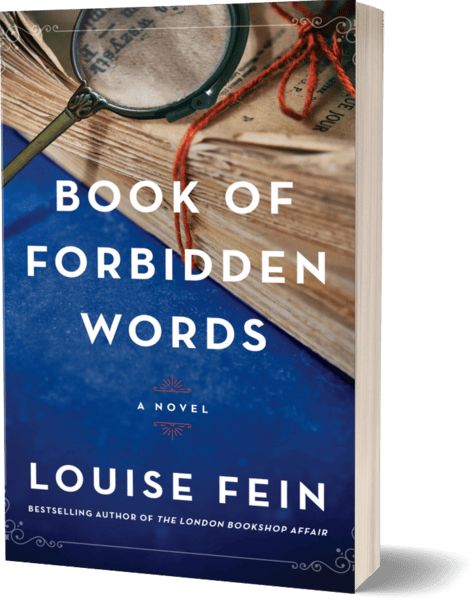
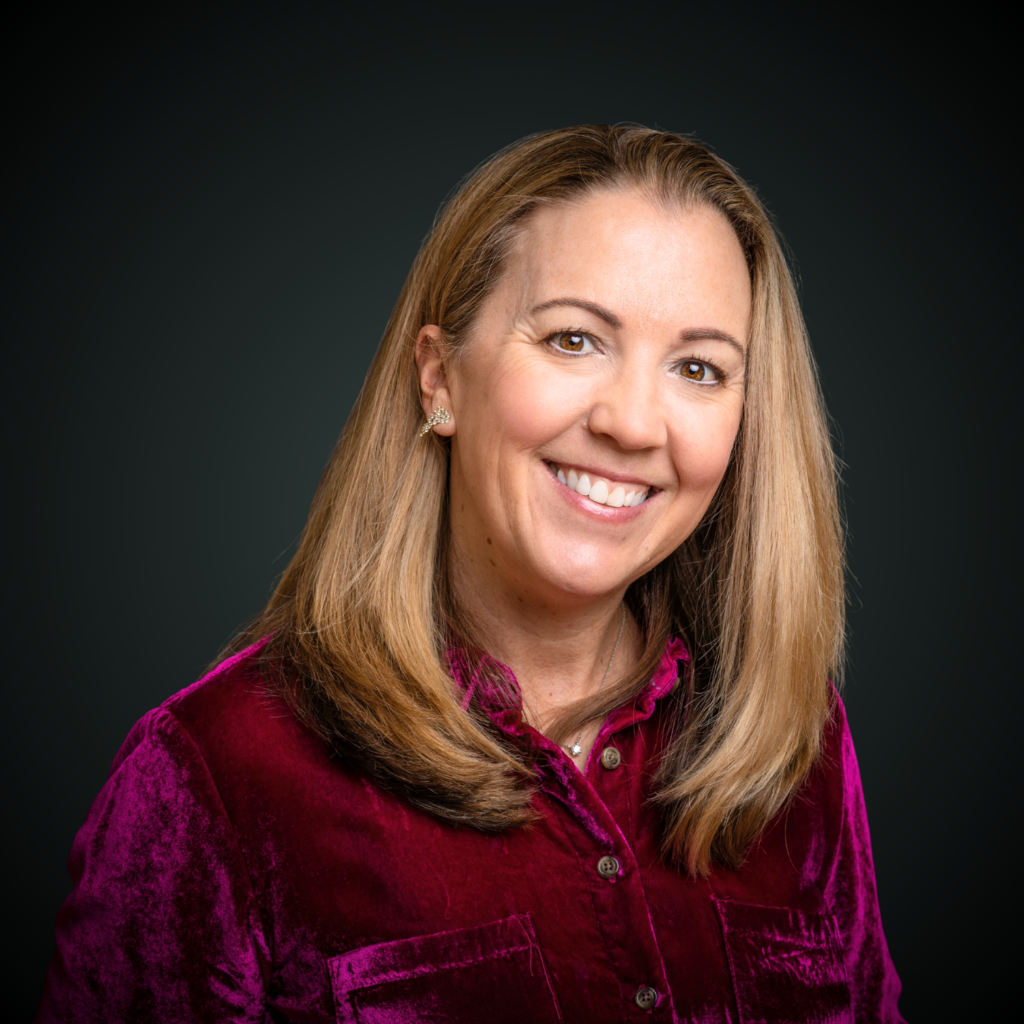
Jane: Welcome to The Jane Healey Happy Hour, the podcast that explores new and exciting novels of all genres. I’m your host, bestselling historical fiction author Jane Healey, and in today’s episode, we welcome bestselling author Louise Fein to discuss her latest book, The Book of Forbidden Words, which has been called a compulsive story of banned books, censh- censorship, and secrecy that always feels intim- intimate and relatable.
Jane: It is bold, brave, and beautifully told. Welcome, Louise.
Louise: Hi. Thank you so much for having me, Jane. It’s really lovely to be here.
Jane: I know. I’m so glad we coordinated, ’cause you are, outside of London. Is that correct?
Louise: I am, yes. I, I live in the, in the countryside, but not too far from London, so best of both
Jane: worlds.
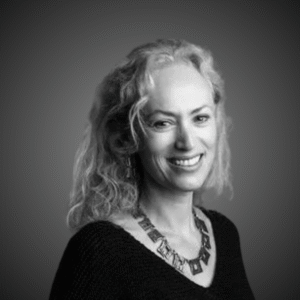
Jane: Lovely. Okay, I’m gonna do a quick bio about you, and then we will jump in. Louise writes historical fiction focused around unheard voices o- or unusual- from unusual perspectives. Her novels have been international bestsellers, shortlisted for literary awards, and translated into multiple foreign languages.
Jane: Previously a lawyer and a banker, Louise holds an MA in creative writing from St. Mary’s University. Equally passionate about historical research and writing, she loves to look for themes which have resonance f- with today’s world. Louise lives in the Surrey countryside with her family and is a slave to the daily demands of her pets, as am I.
Jane: So we share that
Jane: Yeah.
Jane: I, I’m hiding away in the basement so that- … none of them come after me, so. All right. So Book of Forbidden Words. Tell us about the fascinating premise of this story and how you came to write it.
Louise: Sure. So, Book of Forbidden Words essentially is a story of women who dare to use their voice in times of repression.
Louise: I have three protagonists in this story. Two are in the 1500s, and my other character, Millie, is, in 1950s New York. So very, very different worlds that they inhabit. But as the novel explores, they have similar issues of being persecuted when they try to use their voice. So I have Lisbet, who, writes a manuscript.
Louise: This is The Book of Forbidden Words. And, Charlotte is a Parisian printer. And Lisbet visits her, asks her to print this book, and, for various reasons it has to be encrypted, and in the 1950s, an ex-code breaker from Bletchley Park gets hold of this manuscript, and she manages to decrypt it.
Jane: Such a great and unique premise.
Jane: I loved it. So Char- let’s talk about Charlotte Goulard because she was a real historical- She was … person and that you weaved into the story. I wasn’t that aware of her, so talk about who she was and how she was a trailblazer.
Louise: Yeah. So, I started the, the premise of this book really came to me because we’re, going through a sort of technological revolution, and we don’t really know what the outcome is.
Louise: And I was trying to find a time in history where there was a similar sort of revolution, and I came across the… Well, I mean, I knew about the printing press, but I decided to set the story in that time. A- in the early 1500s, Paris and Venice were the sort of main printing centers of Europe. And, because of the guild system that existed in Paris, if a printer’s wife or a daughter of a printer, if she learnt the trade and her husband or father died, she was able to carry on the business, and Charlotte was one of these women.
Louise: There were a few of them. And she was married to a printer from whom she learnt the trade. He died, and she carried on for a short time on her own, and then she married another printer. He also died, and because she was childless, she then carried on for many more years on her own. She was very well-respected, and she, she had what was at the time almost like a, an enormous factory of printing.
Louise: She had something like six printing presses, which was quite a thing, and she also had a shop. And she was very well-known at the time
Jane: S- yeah, so interesting. And then you, you know, this is a dual timeline 400 years apart. Then you have Millie Bennett, who was, you know, I’m a huge fan of female code breakers ’cause of Arlington Hall.
Jane: Mm-hmm. Talk about how you came up with her as a character in the 19- in 1952 it starts, in New York.
Louise: It does, yeah. Well, she… So, the, the initial inspiration for her was actually, an, a great aunt of mine who married a Canadian, airman. And she went off to some… It wasn’t New York, but she went off to some place in Canada that she was thoroughly miserable because it was very, very different to her life here.
Louise: And in the end she actually came back to England and he followed her, and they were very happy, so that was fine. Yeah. But it was, not at all unusual for, English women to marry American soldiers or American airmen, and then follow them out after the war. She, M- Millie is a, is, is a fictional character, but she struggles to fit in.
Louise: It’s very hard to move to a new country, to a place where you don’t really feel like you fit in, and she’s an outsider, partly because of her personality, partly because she comes to live in a, in a different place. And, also she has this history of working at Bletchley Park, but she was never allowed to talk about it.
Louise: And, she played a role as important arguably as her husband, but she never received any accolade for it. She never was recognized in any way, and she struggled, I think, as many women did after having an important role in the war, to then just being a housewife and not having anything sort of o- outside of the home to, to, to work with.
Louise: So that’s really where she came from.
Jane: Yeah, I was thinking about that, ’cause I’m like, “So many of these women did this incredible work, whether it was code breaking or during the war or after.” Yeah. And then they just were expected to go home and have babies and, and that was supposed to be their life, and how much they must have felt like not as fulfilled, you know, and, and-
Jane: Yeah
Jane: lost. And I, yeah, I think, I think you captured that in her, in M- in Millie. Talk about your research. I mean, so you had to research the, 1950s and the 1550s. Very different time periods. So talk about- Very,
Louise: very different.
Jane: What was your research process like, and was it, there anything that surprised you?
Louise: Yeah, I was really daunted because, writing in the 1500s was completely new for me. And, you know, I’d read Hilary Mantel and all these amazing books that I was absolutely terrified of, sort of, you know, making a hash of it. And, so I did do about six months of research before I even started writing the novel.
Louise: I thought I would feel much more comfortable in the 1950s, but oddly, I found that timeline harder to write. I don’t understand why, but I did. And I decided because they were such different timelines, I was gonna write them completely separately, which again, I’ve not done before. But I didn’t want the two timelines jar, and to, to sort of feel unnatural, which was always gonna be a challenge.
Louise: And so I wanted what happened in the 1500s to be reflected in what was happening in the 1950s, so it’s actually easier to write completely separately and I could immerse myself in that world of the 1500s. You know, just from day-to-day life, I had to sort of learn about, you know- Everything from being a nun, because one of my characters is an ex-nun, to just being an ordinary person.
Louise: The Paris streets, there were, there are three different places. It’s London, Paris, and New York, where I don’t live. So there was a lot, lot of research that went on in the background of this book, yeah.
Jane: Did you get to go to Paris? ‘Cause that’s always an,
Louise: an, a nice thing. I did go to Paris, I did. I actually have a sister who lives in Paris, so that was the easy bit, and I went actually when they had, an exhibition on printing.
Louise: Oh, wow … so that tied in really nicely. And, and yeah, I mean, a lot of Paris has changed. Those sort of medieval streets are not there anymore, but there are tiny pockets and a few little houses and places you can visit, which gives you just a, an inkling of what it must have been like. It’s very different today.
Jane: Yeah, I was thinking maybe like the Latin Quarter has some, some of those older streets and things like- Yeah …
Louise: yeah.
Jane: Yeah. So this no- you know, the novel has themes that are very relevant today about censorship and banned books and the fear of new ideas and the- Mm … cost to women a- a- through all of this.
Jane: I… When you first conceived this story, did you imagine these themes would be so very relevant today? I mean, or, or …
Louise: No, because I, I was writing this book, long before the change of, of government in America. And yeah, it’s just unfortunately sort of become more and more relevant as, as the time’s gone on.
Louise: And yeah, I mean, of course, you know, all, all through history there have been times when, we’ve had book bans right from the time books started to be written. So it’s nothing new, but it’s always a sign of, Turbulent times, I think, and, times where certain people get afraid of, losing power.
Jane: Mm-hmm. Yeah. Yeah, absolutely. And I always think it’s… But it’s, it’s terrific though because, I mean, the, the book, you know, talks about all of these themes that are so relevant, and that, that’s one of the great things about historical fiction when you can, like, tie it into, like, present day- Yeah … things going on and how history echoes and repeats and-
Louise: Yeah
Jane: Yeah. So I- talk a little bit too about the… I was, ’cause I, of course, I did, like, a rabbit hole research dive into the, Voynich manuscript. Yes. Which is so fascinating. And I-
Louise: Yeah …
Jane: and the story is partly inspired by that. Tell, tell listeners what that is.
Louise: Yeah. So while I was, researching, I was actually trying to research, female writers in the 1500s, and I just stumbled across the Voynich manuscript, which becomes a huge, inspiration in the book.
Louise: This is a manuscript that actually dates from the 1400s, so it’s earlier than my imagined manuscript. And it’s kept, at the rare, the Be- Beinecke. I don’t know how you say that. Beinecke Rare Manuscript Library at Yale- Okay … University. And, it… I tried to see if I could go and see it, but you’re not allowed to unless you’re a top academic.
Louise: So I couldn’t. But I did manage to get ahold of, a re- a sort of a, a, an exact copy. I don’t know where it is. I s- I was gonna hold it up, but I can’t. So it’s an exact copy of the, of the book, and, it’s, it’s a really interesting, book because you can open up these massive pages of diagrams.
Louise: It’s got these crazy illustrations in, of sort of m- mystical plants. There’s a lot of naked women, but they’re just doing day-to-day stuff like swimming down rivers and being pregnant. And that’s why there is some supposition that it was written by women, because they are the main focus of the, of the illustrations.
Louise: But over all the years, and no one’s ever been able to, to unencrypt it. I was slightly scared that someone might manage it before, before the book was published. But that didn’t happen, so. Yeah.
Jane: Yeah, such a … Yeah, I mean, I, I didn’t, I, like, I vaguely knew of it, but it was so interesting to di- dive deep, and I didn’t
Jane: Yeah, I didn’t realize it was at Yale, though. That’s interesting, too. I didn’t know that’s where it was stored.
Louise: Yeah.
Jane: So I have some writing questions that I ask everyone. You talked, started talking a little bit about your process. I always ask, are you a plotter? Do you plot things out? Do you write by the seat of your pants?
Jane: Are you somewhere in between? What’s your process
Louise: like? Well, I was very much a pantser. I’d sort of know the beginning of the book and I’d know the end, but I’d have no real idea of what happened in the middle, and that meant many, many, many drafts to get to the final product. But now, because I’m sort of on a contract with my publisher, she always makes me write an outline.
Louise: So I’ve had to become a bit more of a planner than I maybe naturally would be. But it has been a bit of a game changer because it just gives me, like a skeleton to work with. So my, my, it’s the whole book plotted out, but not on a chapter basis. It’s just the story essentially.
Jane: Mm-hmm.
Louise: And it just means that I know what is gonna hap- what has to happen in the middle in order to get to the end, and it, it saves me a few drafts of getting, going down the wrong alley.
Louise: But it does, it, it never means that I have to stick completely to that. So, so for the book I’m writing now, I’ve completely changed the ending. I’ve got different ca- you know, different characters pop up. It still means that I can be creative, but I just have a bit more of a structure to work with.
Jane: Yeah, absolutely. I get that, especially when you’re on deadline. I think it hel- helps- Yeah … if you, like, map it out a little bit anyway.
Louise: Yeah. Exactly.
Jane: Yeah. So I, and it, so this, I, I, I’m always interested in structure, and I’m like, oh my gosh, 400 years apart, d- multiple ti- like, multiple POV. Like, did you always intend to write it that way, from the beginning, and, and what came first?
Louise: I always knew it was gonna be dual timeline, I think because I wanted to, I wanted to sort of show that these issues, they arise all the time in history. So whilst it is both timelines are historical, there are, you know, echoes today. And we’re still sort of grappling with the same issues, especially as women.
Louise: And so that’s why I wanted more than one timeline. I didn’t necessarily at the outset realize I was gonna have two timelines in the 1500s. That sort of emerged in the writing. And, because of the, because of the fact that I really needed to reflect what was happening in one timeline with the next, I did have to be quite structurally careful as to how I planned it.
Louise: And although, when I wrote my first draft, it’s … My first draft is really getting the story down. It’s almost like telling myself the story- Mm-hmm … of finding the characters and getting them to come out of their shell, as it, as it were. And then it’s really in the second and third drafts that, that the sort of, it comes alive, if that makes sense.
Louise: And I did chop and change it quite a lot to s- to naturally flow, rather than me forcing it like I sort of was in the first draft, if, if that makes sense. Sorry, I- No, that- … sound a bit convoluted. Trust me, that
Jane: makes more sense than you know for me. Like, yeah, especially with the first draft.
Louise: Yeah …
Jane: another thing that I, you know, because this is historical fiction, and that’s what I write, like, how, what are your kind of rules for balancing, like, historical accuracy ver- versus, you know, fiction, the fictional narrative?
Jane: And are there any, like, you know, strict rules you apply to? Like, do you kind of feel your way a- along with that? I mean, you have one character that is b- is or was a real woman in history, Charlotte. So, so talk a little bit about that.
Louise: Yeah, so I think if you’re writing about a real characters, you have to stick to as much of the truth as, as you can.
Louise: So what is known, I don’t think you can veer away from really. A- and I mean, because she lived quite a long time ago, and we know very little about, you know, what she really thought, you can, you can make a lot of that up. You can imagine. As long as it doesn’t feel completely out of character, I think that’s okay.
Louise: Mm-hmm. You can fill in the gaps. With fictional characters you have a bit more leeway, but I think the events around which you are structuring your story, you can’t, you have to be, y- you can’t change those too much. And I think you, you, you need to make it feel authentic with the time. So, you know, we are writing fiction, and it, and the story is the most important thing, so it’s, it’s fine to change some things.
Louise: And where I do, I always write an author’s note to explain that because sometimes you have to, you know, shorten timeframes or move events a little bit to suit the story. But as long as you explain that’s what you’ve done, I think that’s fine.
Jane: I know. I always say my, y- you know, your author’s note is your best friend as it’s-
Louise: Yeah, definitely
Louise: it’s your out card. Definitely.
Jane: Yeah,
Louise: yeah.
Jane: Yeah. So two-part question. What part of the writing process do you love, that you enjoy the most, and what part do you find the most challenging?
Louise: For me, I think the, the first draft is the most challenging, because although at the ideas stage it’s so exciting and you’re starting this new adventure and it all feels really shiny and amazing in your head, when you get it down on the page and you choose which way you’re gonna go with the story, it always feels absolutely…
Louise: Sorry, my headphone fell out. No, no. It feels, it feels awful. Or it does for me anyway. And it’s a bit like, you know, that sort of metaphor of you have this vision of a beautiful, palace, but what comes on the page is this sort of falling down shack. Whereas I, I really enjoy the sort of the second and third draft phase and the editing phase because that’s when the magic happens, and that’s when you start to, you know, polish that stone and make it, make it into what it’s potentially capable of being.
Jane: Yes. I completely agree. Yeah. And I think a lot of writers feel that way. I, I’m in the first draft phase now. Oh. And, and, and just like so many choices, right? Like so- There’s so many choices, yeah … where do I start, where do I go? Yeah. Like, yeah.
Louise: Yeah.
Jane: And then that is, it’s hard.
Louise: Yeah. And you’re always questioning yourself, and you sort of get to a point, there’s always 30,000 words for me, I don’t know if you feel the same, and I’m like, “Oh, is this gonna work at all?”
Louise: I know.
Jane: Oh, yeah. It’s like, I gotta like ignore the feeling of despair.
Louise: Yeah. It’s like, yeah, yeah. No, you just have to push through and keep going.
Jane: Exactly. Exactly. Yeah. What has surprised you the most about the writing life since your debut novel came out?
Louise: Oh. Well, I think, I think when you, when you write your debut, the lovely thing about it is that you don’t have any time pressure.
Louise: Yeah. And I hadn’t really thought about the fact that when you have a contract and a deadline, that changes everything completely. So you really do have to treat it as a job and sit down and write even when you don’t feel like it and when, you know, it feels really hard. So I suppose I hadn’t really anticipated that.
Louise: But on the plus side, I think I hadn’t realized just how lovely and supportive the author community is, and I’ve made so many amazing friends amongst the author community. And, I think finding your gang is, is one of the most important things, ’cause it is, it is a lonely life Yeah … and it is, you know, publishing has its ups and downs, and it’s great to sort of connect with other people who understand that.
Jane: I completely agree. I was at, the Santa Barbara Literary Festival last month and-
Louise: Oh, nice …
Jane: I saw some author friends in real life, and I was like, “Oh.” You just like, they understand, and they help- Yeah … you know, you support each other, and like, you complain- Yeah … and you celebrate and all the things. Yeah, yeah.
Louise: Yeah.
Jane: It’s so
Louise: great. Definitely. And I, I have a couple of little WhatsApp groups, and we chat every day, and we- Oh … complain to each other and You know, it’s just nice to feel connected, isn’t it? Yeah.
Jane: It really is. Yeah, absolutely. Mm-hmm. What advice do you have for writers out there who listen to the podcast about writing and about getting published?
Jane: Again, this is a two-part question, so.
Louise: Yeah. So, So, o- one piece of advice, and I know that I, made- I fell into both mistakes, but, writing your first draft, and we’ve sort of talked about this, is, is literally that. It’s a first draft, and it’s amazing achievement to finish that first draft, but it is not a finished book.
Louise: So do not send it out, at the first draft stage. Put it away, work on it. I would never ever, ever show anyone my first drafts, ’cause they are truly terrible. But when you’ve been back over it, rewritten it, edited it, even when you’re happy with it, don’t send it to any agents at that point. Send it to some trusted readers, get some feedback.
Louise: Get feedback from people who you know are gonna be honest as well, and not just, friends and family who are gonna say it’s amazing. And take those things on board. Sometimes you will agree with them, sometimes you won’t. But i- you know, o- once you’re published, you have, you will always have to change what you’ve written.
Louise: You will have an editor’s comments, and it will sometimes make you cry. But, you know, so taking that feedback’s really important. And then when you really feel that you can’t do anything better, then only at that point send it out. Because I made the mistake of sending my work out much too early, and then I had to get an editor’s, sort of report, ed- editorial report, and then I spent another two years rewriting that book before I sent it out and got agent interest.
Louise: So, so that’s my first piece of advice. And my second piece of advice actually was touched on as well, is to find, writer friends if you can. Mm-hmm. You know, join a community because, that is the biggest piece of support you’ll get, is other writers and under- s- you know, people at the same stage as you as well is important- Mm-hmm
Louise: I think. And even people who’ve, who’ve, you know, maybe been published and can share some of their insight as well because in some ways it’s good not knowing, not knowing anything about the industry like I did. I was completely naive. But in other ways it’s really helpful to have the knowledge and to be able to navigate, what is a crazy world.
Jane: Absolutely agree. That’s all excellent advice. Yeah. Can you share what you’re working on right now? Are you ready to? And if not, that’s okay too, but I always ask.
Louise: I can share a bit. So I’m actually in the editing stage of my 2027 novel, which is partly set in England and partly set in Boston actually.
Louise: And it is, a sort of post-Irish famine story. It involves, chocolate as well. And, it’s very, very loosely based on a true story. Very loosely based. Which was the initial inspiration, but that’s kind of as much as I think I can say at the moment, so yeah.
Jane: Oh, exciting. Congratulations.
Jane: That’s amazing.
Louise: Thank you.
Jane: I notice you have some excellent book club questions on the back of the book. Do you ever Zoom with book clubs or, or-
Louise: I do. Yeah … have you? I love doing Zooms with book clubs. I’ve done a few for, with bookshops and just, private book groups. I’m really happy to do that, anytime.
Louise: Yeah.
Jane: Oh, awesome. We have a lot of book clubs that listen as well. And other than that, like, what’s the best way for readers to stay in touch with you?
Louise: So I have a website, which is www.louiseFein.com. And then I also, I’m always on … Well, not always. I loiter on Instagram- … under Louise Fein Author.
Louise: Which is kind of the main place I hang out really. So yeah. I’m on Fa- I have a Facebook page as well, so.
Jane: Excellent. Well, this was lovely. I’m glad we finally rescheduled. I know with our time differences- Yeah … and everything we had to, we’ve had to reschedule a couple times. Louise, thank you so much.
Jane: That’s a wrap. The, your novel, the latest one, is Book of Forbidden Words, and it’s available now wherever books are sold. My latest novel is The Women of Arlington Hall. Please remember to subscribe to my YouTube channel or follow me wherever you listen to podcasts. Thank you again, Louise. Lovely to meet you, and thanks- Thank you, Jane
Louise: everyone for listening. Thank you. Thank you so much.
Jane: And we’re good. All right. Awesome. And that recorded. So I, I always get paranoid that it’s not gonna record. And,