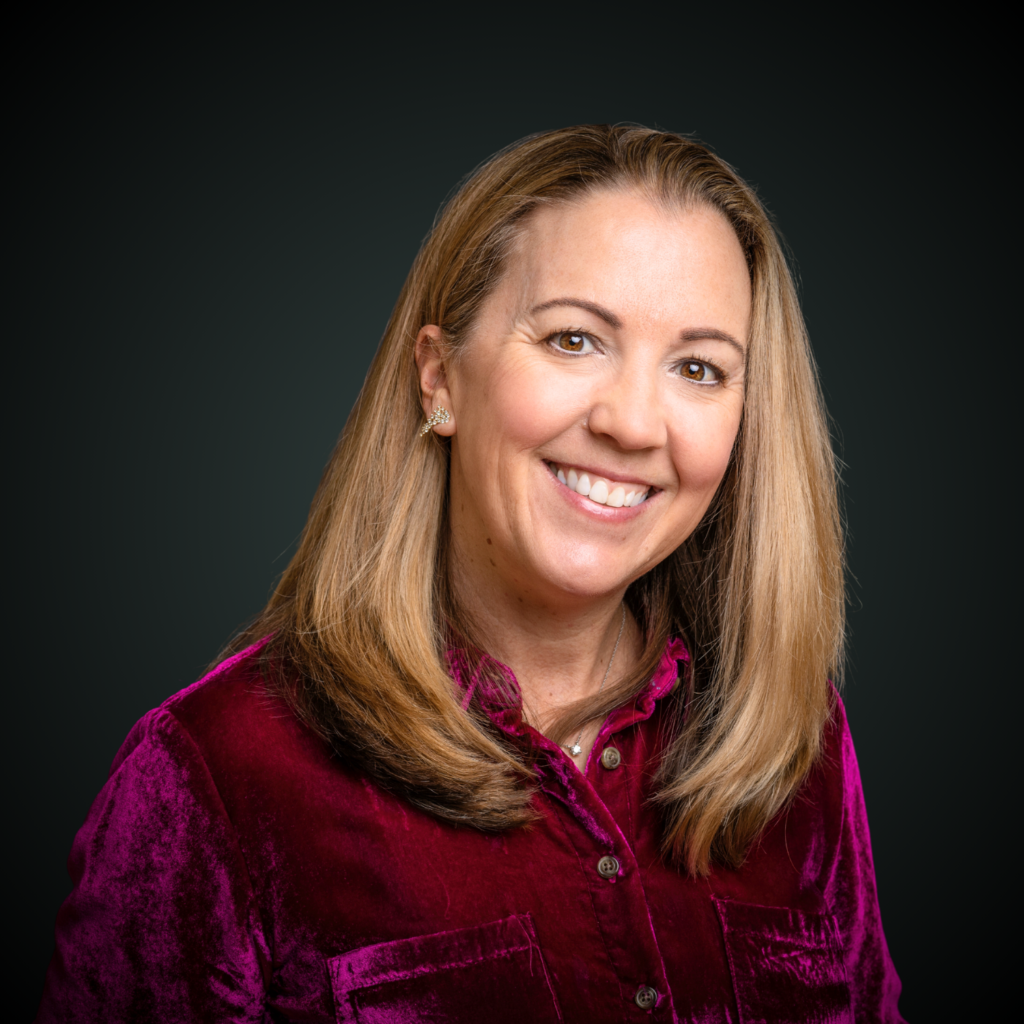

In this episode of The Jane Healey Happy Hour, Jane Healey welcomes author Kitty Zeldis to discuss her historical novel One of Them, a story of friendship, identity, and belonging at Vassar College in the years following World War II. Kitty shares how Vassar’s history of antisemitism inspired her to explore two Jewish women who make very different choices about revealing their identities, and recalls a troubling experience from her own college years. They also discuss the challenges of writing about Palestine in the 1940s, balancing historical accuracy with fiction, and how unexpected turns can shape a novel. Plus, Kitty offers practical advice for aspiring authors, including why persistence, a trusted writing community, and faith in your own work matter so much.
HISTORICAL HAPPY HOUR
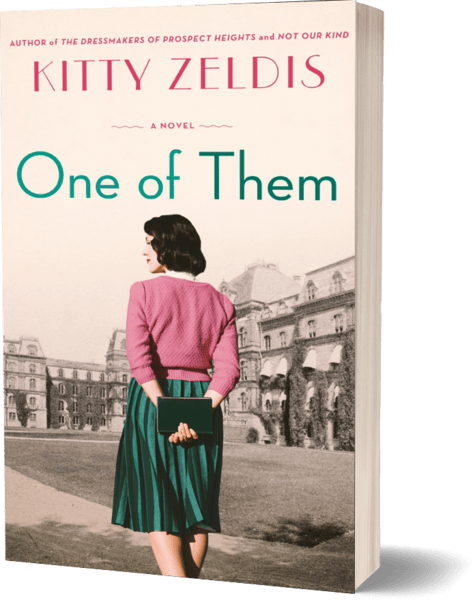
One of Them by Kitty Zeldis
- Episode: 107
- 28 Minutes
Here’s what we covered
- 00:01 – The inspiration for One of Them and Vassar’s exclusionary history.
- 03:47 – Researching Vassar and exploring antisemitism at elite colleges.
- 08:11 – Anne and Delia: two women with very different approaches to their Jewish identities.
- 10:30 – Kitty’s writing process, unexpected plot developments, and the novel’s structure.
- 12:41 – Historical accuracy, Palestine in the 1940s, and the connections between historical fiction and current events.
- 16:23 – Kitty’s career writing children’s books and her decision to use a pen name.
- 20:26 – Advice for aspiring writers: persistence, writing communities, and navigating publishing rejection.
EPISODE TRANSCRIPTION
[00:00:00]
[00:00:04] Jane: Welcome to the Jane Healey Happy Hour, the podcast that explores new and exciting novels of all genres. I’m your host, historical fiction author Jane Healey, and in today’s episode we welcome acclaimed author Kitty Zeldis to discuss her latest novel, One of Them, which Library Journal called, “A strong story of women’s friendship set against a dynamic historical era.”
[00:00:25] Jane: It was just released in paperback yesterday, October 13th. Welcome, Kitty, thanks for doing this. Hi.
[00:00:31] Kitty: Hi.
[00:00:31] Jane: Thanks for
[00:00:31] Kitty: having me.
[00:00:33] Jane: So I’m gonna do a quick bio about you, and then we can talk about this wonderful novel. Thank you. Um, Kitty Zeldis is the author of Not Our Kind and The Dressmakers of Prospect Heights.
[00:00:43] Jane: Writing under her own name, Yona Zeldis McDonough, she has published nine novels and more than 40 books for children, and she has been the fiction editor of Lilith magazine for over 20 years. Born in Israel and raised in Brooklyn, she studied art history at Vassar College and Columbia University. She lives in Park Slope, Brooklyn with her family.
[00:01:02] Jane: Again, welcome.
[00:01:04] Kitty: Hi.
[00:01:04] Jane: Hi. So this novel takes pl- this is a little bit of biographical novel for you. So it takes place in Va- at Vassar College.
[00:01:12] Jane: Tell me about the origin story of this novel a- and the premise, how you decided to
[00:01:17] Kitty: write
[00:01:18] Jane: it.
[00:01:18] Kitty: Well, um, well, I guess I should talk about the premise first, and then- Yeah, yeah
[00:01:21] Kitty: the origin story. There, there are two young women we meet at Vassar in 1947 in the fall, and they are both Jewish, but one of them has a name that disguises that. It’s something her father chose when he was getting into business and he wanted to advance his career, and so she decides that she will not be Jewish when she goes to Vassar.
[00:01:42] Kitty: She thinks it will improve her social capital, and it does, but it creates a whole other set of problems, and ultimately a moral dilemma for her that she does not anticipate. And so this novel is really about that, you know- Yeah … how she, you know, how she reconciles that.
[00:01:58] Jane: Yeah, such a good premise, and I should mention that it starts in 19- right after World War II.
[00:02:02] Jane: Literally right after World War II. Right. 1946. Um, and so w- what made you decide, okay, I, I went to Vassar, I’m gonna write a, a Vassar-based story about this friendship and this, this girl with this secret?
[00:02:15] Kitty: I guess there are sort of two prongs here. Having gone to Vassar as a Jewish girl in the 1970s, there were plenty of Jewish students and Jewish faculty members, but the place itself had a kind of, exclusionary history that I could not ignore.
[00:02:31] Kitty: Mm-hmm. It didn’t make me love it less, but in fact, that was kind of like the constant tension in a way that this place I loved, I became very aware that I would not have gone there, even before the 1960s. Jewish girls just weren’t going except in very small quoted numbers, and I would not have been such a girl.
[00:02:50] Kitty: You know, I never, I’m I think I’ve been sort of dealing with that my whole adult life, like wanting to be part of it and yet not fully being part of it. And then in a more immediate sense I was watching The Gilded Age. I don’t know if you’ve been watching that. Ah, yeah, I love that. I’m waiting for season three.
[00:03:04] Kitty: And early on in the series, you know, we have Bertha, this very rich woman who’s still not accepted by the women she wants to be accepted by, and I thought, “Is it because she’s Jewish and they’re not revealing that yet?” I, and actually, it turns out that was not part of the storyline there. It’s not because she’s Jewish.
[00:03:23] Kitty: Oh. But it got me like sort of hopped up, and I thought like, I liked that, like her desire, and the more she wants it, the more elusive it becomes. They simply will not let her in. Yeah. So that’s where this kind of started, like I wanted that.
[00:03:40] Kitty: I like
[00:03:40] Jane: that. So interesting. Yeah. I love the premise. I so talk about, I mean, you went to Vassar at a very different time, the 1946.
[00:03:47] Jane: What was your… So you had, but you have a base because you went there. What was your research like for this story, and, um, did you find anything that surprised you?
[00:03:57] Kitty: I didn’t have to do a lot of research, but what I did, I was very much helped by the people in the library and in various other offices.
[00:04:05] Kitty: It’s sort of like an extension of being a student there where it’s very student-centric.
[00:04:10] Jane: Mm-hmm.
[00:04:10] Kitty: Not true of all places. And so like whenever I had a question, I could just, like I got a couple of names and I would just email somebody and like sometimes the same day or the next day somebody got back to me with all these things, you know, all these answers.
[00:04:23] Kitty: So, so that was really great. I loved that part of it. So that part was easy in a sense. And I know enough, to kind of shape the thing without having to do a lot of research. On the cover of the book is Main Building. I mean, it’s like right there. You know, they found that picture, yeah,
[00:04:39] Jane: amazing.
[00:04:40] Jane: So this is a story about a friendship, but it’s also very much a story about antisemitism that was so common at elite colleges back in the day. So and, you know, and s- there’s admission quotas and restricted clubs. Talk a little bit about that world and the Jewish students who chose to take that path, like to go to a school like this.
[00:05:02] Kitty: Uh- You mean back then, or?
[00:05:03] Jane: Yeah, back then. Or recently? I mean, well, I mean-
[00:05:05] Kitty: I, I, they had a, they, I think they had a difficult time- Yeah … um, of that. And, you know, there were reasons that they wanted to go to such a place, but this is just, you know, you’d have to decide, “Do I want to fight that fight all the time?”
[00:05:20] Kitty: And sometimes the fight is less- It’s what I call, like, received antisemitism. It’s not obvious or active. It’s just people not thinking, not being aware. And I had an experience there, which to me is emblematic of that, you know, much later in the ’70s. So I was an art history major, and I was a good student and it’s a wonderful department, and I was very involved with all the things in the department.
[00:05:42] Kitty: Whenever there were lectures or talks or events, I always participated, I always went. So one night there was a lecture being given by a visiting professor about Rococo painting, which if you don’t know, is, like, very light and frothy, like girls in big dresses and, you know, the boys who love them, and it’s all very nice and, kind of charming and romantic.
[00:06:03] Kitty: And I, I have a, I get a friend to go with me. She’s a poli sci major, and we sit in the front row. And we’re listening to this introduction to this speaker, who is a professor from Germany and, uh, and this is the 1970s, so the war was, what, like 30 years behind us. I don’t know that I had any expectation about, you know, hearing about his history or his past, but when they came to some of that in the war years, he was a high-ranking general in the army.
[00:06:28] Kitty: And my friend, who was way more woke than I was, like, elbows me and says, “Do you get it? He’s a Nazi. We have to leave.” Uh, or he was a Nazi. And so we get up, to everybody’s annoyance, and, like, we make kind of a little stir when we’re leaving. And we go back to her room and we spend the whole night talking about this.
[00:06:43] Kitty: Like, how could they? What were they… How dare they? And, the indignation of 20-year-olds, like, you think you know everything.
[00:06:48] Jane: Yeah.
[00:06:49] Kitty: So the next morning, indignation still, like, burning brightly, I march over to the art history department. I ask to speak to the chairman, and I tell her my story. Chairwoman, I should say.
[00:06:58] Kitty: And she listens patiently and she said, “Well, actually, we didn’t invite him. It was the German department.” Off I go, cross campus to the German department. And- Good for you … same conversation with the chairman of the German department, who’s a very nice man and listens to me very patiently and, and when I’m done, he says…
[00:07:14] Kitty: You know, I say, like, “What, what did you think, like, the students were gonna think? Like, what did you think the Jewish students… ” He said, “Quite honestly, we never even thought of it And like that was the biggest shock to me. Like you, who you are, your identity, your history, like we don’t even see that. Yeah.
[00:07:30] Kitty: Like that, we just don’t even notice that. I don’t think that would be true now. I think people are more aware of things like that now. Um- Yes … but that was the biggest shock.
[00:07:39] Jane: Yeah.
[00:07:39] Kitty: Like, we don’t even see you.
[00:07:41] Jane: Uh, y- in the ’70s. Yeah. Yeah. So much time had passed. It is really fascinating. I, I… The book I was just working on takes place in the, in Italy, like in the late 1940s, and this collective amnesia that kind of fell over the world- Mm-hmm
[00:07:55] Jane: after the war. Yeah. Like people just wanted to move on. Yeah. They didn’t wanna talk about it. They didn’t wanna deal with the horrors of it. Yeah. And try, were trying to kind of, yeah like just forget it ever happened, which was- Right … was shocking to me, actually. Right. But yeah. But I think you’re right.
[00:08:11] Jane: I think nowadays people would be much more- Mm-hmm … aware, but yeah. Yeah. Yeah. Unbelievable. Um, I wanna talk about the two main characters who deal with their Jewish identity very differently, obviously. How did you develop them? Let’s, we can start with Anne Bishop. She’s the one who keeps her… She goes by Anne.
[00:08:29] Jane: Right. Her real name’s Miriam.
[00:08:31] Jane: She passes as a Gentile to fit in with her WASPy friends at Vassar. How did you develop her?
[00:08:37] Kitty: Well, she’s grown up amid other WASPs, and she’s al- and as the novel describes, she’s felt this little kind of dissonance before- Mm-hmm … where she’s been excluded from something.
[00:08:49] Kitty: She, there’s an invitation to the Colony Club, and she, at the last minute she finds she can’t go because Jews aren’t admitted there. And everybody’s sorry about it, but like, it doesn’t change anything. Mm-hmm. They’re going and she’s not. Yeah. So she’s already faced this, and it has bothered her pretty much her whole life, and now she has an opportunity to do something about it because her father…
[00:09:09] Kitty: Her mother has died long ago, before the novel begins, and her father dies right before she goes off to school. So she’s in this position where she’s kind of able to remake herself, and she thinks it will just- change her life in a good way. Delia her counterpart, has grown up in Europe. She’s American, uh, American parents who moved there in the 1920s, and she’s had to leave the country very abruptly when the Germans come to Paris in 1940, and and her mother gets left behind in a, in a kind of complicated, a very upsetting way.
[00:09:43] Kitty: Her parents have a fight. Her mother disappears. They’re scheduled to leave, and they go without her. So this issue of, like, people not liking her because she’s Jew- she just doesn’t care. Right. She has… She is, like, way beyond that. She has faced things much more difficult disruptive, traumatic even, than that, and they don’t like her?
[00:10:03] Kitty: Big deal. Right. Yeah. Like, it’s not bothering her so much. Yeah. So you know, they have very different attitudes. She sees no reason to hide it because she has moved on-
[00:10:13] Jane: And been through that …
[00:10:14] Kitty: long, long before.
[00:10:15] Jane: Right. Yeah. Yeah. It’s so interesting. I wanna talk about, uh, you’ve writ- written so many books, so impressive.
[00:10:22] Jane: I wanna- Well, I’m
[00:10:23] Kitty: old, so there’s that. And the children’s book people say, “Oh, so many.” I say, “They’re really short, so there’s that too.”
[00:10:30] Jane: But still, 40 is 40. It doesn’t matter long or short. I, I love to ask, I always ask every writer who comes on writing questions, ’cause we have a lot of aspiring authors and writers in the audience- what is your process like? Do you plot things out, or do you write by the seat of your pants?
[00:10:47] Kitty: More the seat of my pants, and- Really? … because the kind of novels I write allow that. I think if you write, I don’t know if your audience is among these writers or readers, like thrillers or suspense novels, it seems to me you have to really walk that line very carefully because you don’t wanna give everything away too soon, but you also don’t want the reader to come to the end and think, “Where did she get that from?
[00:11:09] Kitty: That’s ridiculous.” Yeah. Like, “She just pulled that out of a hat.” Mm-hmm. It’s got to be, it’s gotta be something that was there and maybe the reader didn’t quite pick up on, but it was always there. I don’t write that, so I don’t have to do that, and in fact, I look forward to the surprises. Like, these characters go to Palestine.
[00:11:27] Kitty: I had no, no notion that was going to happen, um- Yeah … because I wrote… I sold this novel on a synopsis and sample chapters, and that was nowhere in any of it, and yet they found their way there. And, like, once I got that idea, I felt like, “I’m going with this.” Yeah. Yeah. It felt like a delight to me.
[00:11:47] Jane: Y- yeah, and actually, th- that leads to my next question because another thing I’m always interested in is structure and point, and choices in point of view, and this novel is told from Anne’s point of view, and Delia’s Paris, Palestine, New York.
[00:12:02] Jane: I- um, t- talk about that. Did you alway- does the structure ob- ki- because you’re a pantser, does it kind of evolve as you go? Do you go through m- many drafts to find it?
[00:12:12] Kitty: I certainly go through a lot of drafts. I tend to write- Yeah … quickly and have to rewrite, you know, or revise. And yes, you’re right, this, the, the locations really kind of form the structure because those were- Mm-hmm
[00:12:22] Kitty: you know, kind of like those locations determined what was happening. You know, they start at Vassar, they go to Paris, there’s this detour to Palestine, and then, and there’s like a little brief interval in New York. But it’s really sort of connected to Poughkeepsie and Vassar, and then back at Vassar for the end.
[00:12:41] Jane: Yes. So you said that Pal- you didn’t know Palestine would be a part of the book. And then, y- you know, y- you chose this time in- when Palestine would become part of Israel during the story. You were born in Israel. Obviously, you didn’t have to, I mean, you had to do some his- some research. Um, but what, in terms of balancing historical accuracy with fiction is, like, how do you strike that balance?
[00:13:06] Jane: Are there any rules you adhere to? Is it another kind of intuitive thing?
[00:13:11] Kitty: This is a particularly fraught situation. I started writing this before October 7th, and since that time, Israel has become such a flashpoint, and really reviled in the world in a way that it was not for my whole childhood.
[00:13:27] Kitty: And I was, you know, I’m trying to make sen- still trying to make sense of that, and wanted that to come through in the novel. I really want it to be even-handed and say there are competing claims here, and they both have validity.
[00:13:41] Kitty: And I think there has been terrible behavior on both sides.
[00:13:45] Jane: Mm-hmm.
[00:13:45] Kitty: And, you know, it’s kind of like, like a group of- Naughty children. I mean, I, I don’t wanna trivialize like that. I, like, I wanna say to everyone- Oh … just stop this. This is not- Yeah … sustainable. Like, look what you’re doing to yourselves. And, uh, that was important to me, like, not to take a side and say- Right, right
[00:14:03] Kitty: there’s only one right point of view here. And, uh, because I don’t feel that way. I don’t feel that
[00:14:10] Jane: way. Yeah. And I think that you, you have book club questions, reader questions in the back, and I, I love how you framed it as a conversation with present day politics. Like, this is… You know, histor- historical fiction can be like a p- a conversation with what’s going on in the world today.
[00:14:25] Jane: Mm-hmm. And I think this book very much falls into that category because of everything you just discussed. Mm-hmm. You know? And I, I think it’s important. I think you know, unfortunately, a lot of people lack context with what’s going on in the world there. Right. You know, in that part of the world. Right.
[00:14:39] Jane: Um, and these type of stories are important because of that. Yeah, that’s what one of the things I was thinking about when I was reading it and reading the back your discussion questions and I thought they were great. What part of the writing process do you enjoy the most, and what part do you find the most challenging?
[00:14:55] Kitty: Well, the beginning is always the most challenging. You are faced with blankness. There used to be a piece of paper- Mm-hmm … now it’s a screen. Mm-hmm. And, like, from this blankness you have to conjure something. Yes. Uh, so I kinda like… You know, but once I get into it, I like that part. I like that part when it feels like I am not creating it, I am transcribing it.
[00:15:18] Kitty: Mm. Like, I am a conduit through which this material is flowing, and someone is, like, poking me and saying, “I have something to tell you. It’s really important. Write it down. Get it right.” And I love that, and it doesn’t happen right away. It doesn’t happen all the time. It happens enough to make me wanna keep doing it, but-
[00:15:34] Jane: Right
[00:15:34] Kitty: it’s, that is the best part.
[00:15:37] Jane: Yes, and I feel like you just gotta go through that pain in the beginning- Mm-hmm … to get to that- Yeah … to get to that flow, right? You know? So many choices. Where do I begin? Yeah. Right. Exactly. So you’ve written, like I said, so many books. What has surprised you most about the writing life since your first novel came up, came out?
[00:15:58] Kitty: About the writing life? I don’t really know. I don’t feel like there were that many surprises. I, it was- Okay … w- as I, I was 45 when I published my first novel, so that’s kind of late in the game. And it was like I imagined. Like the book came out, and then I could do this, like, all the time. That was really good.
[00:16:18] Kitty: Great. Like, I really like that. Uh, it’s what I wanted- … what I hoped for, and it was as good as I thought it would be.
[00:16:23] Jane: Amazing. So did… Wait, did the children’s books come out before that, or af- or uh, during that
[00:16:27] Kitty: time? During. Okay. I mean, I, I was writing fiction, and then I had no interest in writing children’s books.
[00:16:32] Kitty: My mother, who is a self-taught painter with a significant reputation, she has work in a lot of museum collections, including the Smithsonian, she got some contracts in the ’80s, or late, late ’80s, early ’90s, to do some children’s books. That was like a big go-go moment for picture books. Oh, yeah. You know? And there was, like, a lot of money to be spread around.
[00:16:52] Kitty: And she did a couple of books, and then she said, “We should do a book together.” And I said, “Yeah.” I think I can.” And, “Yes, you can, and we’re gonna do it.” And then she got me a contract with HarperCollins. Amazing.
[00:17:02] Jane: That’s
[00:17:02] Kitty: amazing.
[00:17:03] Jane: Um,
[00:17:03] Kitty: Greenwillow. I know, a very, very fine publisher, um- Yeah … for children’s books. And, you know, at this point I’m freelancing and I think, well, it’s a contract.
[00:17:11] Kitty: Like, you don’t- Yeah … walk away from a contract. And the books we did together, there were like seven or eight of them, she was totally the engine for them. They were nonfiction, they were biographies, and they were about people she admired and wanted to paint. Amazing. And that’s what we did. And so we did a book about Anne Frank, we did a book about Benjamin Franklin, we did a book about Nelson Mandela.
[00:17:34] Kitty: Like, whatever- incredible … whatever she wanted- Yeah … we did. And I enjoyed this process very much, and, you know, I feel like I learned some things from doing that. But as I was doing it, I had this like little urge to write fiction for children. And interestingly enough, or at least to me I wanted to write historical fiction, although I didn’t know that’s what it was then.
[00:17:56] Kitty: You know, because when I was a young reader, I liked books, you wouldn’t have called them historical fiction ’cause they’d been actually written in the past, but I gravitated towards books that were written in the past. So I began doing that, and now I had contacts in that world. Yeah. So I, I was able to publish a number of historical fiction, you know, middle grade books, which I loved, and they were my favorite, and they did not involve her.
[00:18:20] Kitty: Because if they had illustrations, they were a different kind of illustration, and there were- Drawings … a lot fewer… Yes. Like smaller- Yeah, yeah … line drawings, little watercolors. The pictures were not the engine. In a picture book, the pictures, like, do a lot of work.
[00:18:33] Jane: Mm-hmm.
[00:18:33] Kitty: Totally. As it should be. So that was really nice, and I, I loved doing that, and quite honestly, I would still do it except the market has sort of veered away from that.
[00:18:41] Kitty: I know. And now it’s, like, more speculative or, like, werewolves or dystopia. And hey, there’s a place for all these things. I’m just not the person. I don’t… It’s not what I read, it’s not what I wanna write, so I think I should just leave it to someone else.
[00:18:55] Jane: Right. Yeah, there’s a lot of that right now, you know?
[00:18:57] Jane: Yeah. But trends come and go, like, you know, in all genres, I think. Hopefully it’ll come back
[00:19:02] Kitty: around. Yes, maybe it’ll come back. But, yeah. I’ve had a few manuscripts, or partial manuscripts, that I tried to sell, and I just didn’t get the response I used to get, so I’ve left it behind for now. Or put it aside- Yeah, yeah
[00:19:14] Jane: And so, and you just changed to a pen name for adult historical fiction, is that right too?
[00:19:18] Jane: Like, that you’ve written-
[00:19:19] Kitty: Yes … three? Um- Yeah … because my, when I went to Harper Collins, and that was the, the first historical novel I wrote was Not Our Kind, for adults. Mm-hmm. And they said, “We think this is different enough from what you’ve been doing in the past that it warrants a relaunch and a new name.”
[00:19:35] Kitty: And I thought, “Oh…” They weren’t asking me, they were telling me. They told me nothing. Okay But they told me. Okay. And I thought, “Okay.” And Kitty is a college nickname that I’ve had for years, and I’ve had there’s a whole group of people that were calling me that since college. And so when they said that, I thought, “Well, of course it’s Kitty,” and Zelda is my maiden name.
[00:19:54] Kitty: I thought, “Okay, I can get behind that.”
[00:19:56] Jane: That works,
[00:19:56] Kitty: yeah. Like, that feels, that feels right. Mm-hmm. So, um, I did it.
[00:20:00] Jane: Excellent.
[00:20:00] Kitty: And I’m happy with it. Yeah. I’ve always hated the name, I’ve always hated the name Yona. It’s a Hebrew name. I understand why my mother gave it to me. She’s 95, in a nursing home, in a wheelchair, suffering some, from some cognitive decline.
[00:20:13] Kitty: I really should forgive her, but I haven’t. I feel like, “You had one daughter to name, and this is what you came up with? Are you kidding?” God bless. Anyway, so then I could be Kitty, like, all the time now. I just think we’re going with it.
[00:20:26] Jane: That’s right. That’s right. Yeah, no, I love it. W- so what advice do you have for writers about, this is a two-part question, about writing, the writing process, and about getting published?
[00:20:38] Kitty: Okay. That’s a big question, but- It
[00:20:40] Jane: is …
[00:20:41] Kitty: uh, I would say that persistence is as important as talent. Hmm. I used to take writing workshops in New York many years ago, and there were some very talented people in my class, and they didn’t persist. You just have to keep doing it, as difficult as that is.
[00:20:59] Kitty: Back in those days, you sent manuscripts around by mail, by snail mail. Mm-hmm. And one of the best gifts I ever got was my husband bought me a postal scale. I still have it somewhere in there. Awesome. And it meant that… And then the mailboxes had, like, those big openings, so you could actually put a manuscript in it.
[00:21:15] Kitty: Yeah. Can’t do that anymore. Nope. But it meant that I could prepare 20 envelopes- To 20 literary magazines or agents or publishers or whatever I, you know, whoever I wanted to contact, and I had the post- I could buy the postage for it myself and not have to wait in line at the post office. I would mail out 20 stories at a time.
[00:21:36] Kitty: I was writing short fiction then. Oh. And when I got one back, I made myself mail it out again within 48 hours. I had that little rule. Wow. The 48-hour rule. Like you just, it’s very discouraging to hear no.
[00:21:47] Jane: It is,
[00:21:48] Kitty: yes.
[00:21:48] Jane: But,
[00:21:49] Kitty: you know, the thing for me that took the sting out of it was to think, well, maybe this time, maybe this’ll be the one.
[00:21:53] Kitty: Yeah. So I think that is really, really important. I also think it’s good to have a community of writers. Yeah. Someone like that holds you accountable. I’m a big believer in workshops, classes. It doesn’t have to be an MFA program that costs- Right … so much money and is gonna probably put you in debt, and then what are you gonna do when you get out?
[00:22:12] Kitty: Take a writing class any- like they’re all over the place, right? Like- Mm-hmm. Oh, absolutely … schools, community colleges, like all kinds of places are offering non-matriculated classes- Yeah … which are very reasonably priced, and it gives you both the accountability, like, you know, you’re gonna read your work at a certain point and you have to have it ready to read and a community of people that you can talk to and who are in the trenches with you.
[00:22:34] Kitty: It does- I don’t think it does you much good to show a manuscript to like your mother or your boyfriend or your best friend. People who haven’t written novels are amazed that you could write one at all. That’s right. They’re not in a position to comment on, its strengths and its weaknesses and where it could use improvement.
[00:22:51] Kitty: They’re just not. No. So I, that, that is not, I don’t think, helpful. Like I, my husband never read my manuscripts. Like I loved him, but that wasn’t his job. You know? I had- Right … I had my beta readers, and there was one person I think of in particular I met in a workshop many, like in 1984, I’m really dating myself.
[00:23:10] Kitty: She’s still my first reader. Oh, amazing. She doesn’t live national on me. Doesn’t matter, now we can do it by email. Like I still send her my work. Oh, great. And I have a few people that I can… A- and I will read theirs, and I think, so I, I really encourage people to find that person or those persons that you can share your work with.
[00:23:26] Kitty: And as for getting published I wish I could be more encouraging about this. It’s really hard. I mean, harder than- Yeah … it used to be. You know, you used to be able to write to agents and at least get… I mean, not publishers, even in my day, like you didn’t approach a publisher directly because you weren’t gonna- Mm-hmm
[00:23:43] Kitty: hear anywhere unless you knew somebody, like very well. Yeah. But agents would accept queries, and now it seems like they don’t. I’ve had… I joke, I’ve had one husband and, like seven agents. And the last time I had to look … I know, it’s really, it is really dispiriting to look for an agent, and the last time I went out looking, I’d already had several novels published so I had a track record, and I wrote mostly to people, I think I approached maybe 10, and they were mostly people where I could say in the subject line, “So and so told me I could write to you”, or something like that.
[00:24:15] Kitty: But there were three in which I just decided I’m gonna cold call it and do it like that. In all three cases I got emails back immediately saying, “We accept no unsolicited queries or submissions. Your material has been deleted.” Like, this is- Wow … an agent.
[00:24:30] Jane: Yeah.
[00:24:31] Kitty: Oh. Isn’t, like, isn’t that what you do? Isn’t that- Yeah
[00:24:33] Kitty: like, don’t you look for manuscripts? Isn’t that the point here?
[00:24:35] Jane: Especially given your track record, like, come on.
[00:24:37] Kitty: Yeah. Like, that was, it was really shocking to me that was the case. And then one contacted me and said, “I will…” And this is for Not Our Kind, which is the best-selling adult book I’ve had.
[00:24:47] Kitty: It sold very well, and I’m still making royalties from it, and it was published in 2018, so I think that’s pretty good. Wow. It earned out and it’s still making money. Uh, she said, “Yeah, this book is going nowhere. I’ll represent your children’s work, but you’d have to put this aside.” And I thought, “No-“
[00:25:03] Jane: No … “
[00:25:03] Kitty: not.”
[00:25:04] Kitty: You are an adult. Which is actually brings me to my last point. Sometimes the only thing you have is the faith in yourself and your need to do this. Mm-hmm. And that is not insignificant.
[00:25:14] Jane: Yes.
[00:25:15] Kitty: That’s absolutely right. Despite the rejections, you have to, you just have to say, “Okay, I am going to keep doing this.”
[00:25:20] Jane: Yes, and your own vision, like you said. I mean, she passed on the, on the book that was most important to you. Right. Like, you don’t wanna
[00:25:26] Kitty: And that did the best. Yeah. Like, hello.
[00:25:28] Jane: Yeah.
[00:25:28] Kitty: She was just… It’s okay. It wasn’t for her.
[00:25:30] Kitty: It wasn’t for her.
[00:25:31] Jane: Exactly. Exactly.
[00:25:32] Kitty: But it didn’t mean it wasn’t for anyone, and-
[00:25:34] Jane: Yeah
[00:25:35] Jane: so. Excellent advice across the board. Are you ready to share what you’re working on next?
[00:25:40] Kitty: Only a little bit, ’cause I don’t wanna jinx it, but I have a side hustle, which is that I sell vintage clothing on, like both- Oh, I saw
[00:25:48] Jane: you on
[00:25:49] Kitty: TikTok … yes, TikTok. I, I do. It’s amazing. It’s called Carol Street Vintage, and I really love it, and I am writing a novel kind of centered around that.
[00:25:57] Kitty: Oh, amazing. There, there’s a character who is, uh… And it wasn’t my idea initially. It was actually my agent who follows me on Instagram. And then she said, “You know, I think you could do something with this. I think this is a good topic.” And I, and she said, “I don’t really, I don’t like to tell people to write to the market, but God, I think we could all use a feel-good book now.”
[00:26:16] Kitty: Yeah. And when she said it, I thought
[00:26:19] Jane: Right.
[00:26:20] Kitty: And I’m going to write one. I’m going to write a feel-good book.
[00:26:22] Jane: Oh, that’s amazing.
[00:26:23] Kitty: So that’s what we’re doing, Dottie and I. She keeps me company. That little chair there, she sits… That’s her office. This is my office, and when I’m working, she’s under that chair.
[00:26:32] Jane: The queen- She’s the queen … sitting behind you.
[00:26:35] Kitty: She’s the little queen who sits behind
[00:26:36] Jane: me. So cute. What is the best way for readers to stay in touch with you?
[00:26:41] Kitty: I am on Instagram as KittyZeldas. Okay. And I’m on TikTok as KittyZeldas, so please. Great. I check my phone, like, all day long. Don’t we all?
[00:26:51] Kitty: Uh, so I’m happy to hear from people. Writers without readers are no one. Right. Like, what are we doing? I mean, Dottie is great, but as I said, she’s illiterate. I can’t discuss what I’m doing with her. She can’t read my books and talk about them. So I wanna be read. I think most of us wanna be read.
[00:27:05] Jane: Absolutely.
[00:27:06] Kitty: Absolutely. I think that’s why we’re doing it. We wanna- That’s right … we wanna engage in that way. Mm-hmm. So please be in touch.
[00:27:12] Jane: That’s right. And that’s a wrap. Kitty, it was delightful to chat with you this morning.
[00:27:16] Kitty: Same. Thank you for
[00:27:17] Jane: this. Thank you. Thank you for being my guest.
[00:27:19] Kitty: Such a nice way to-
[00:27:20] Kitty: start the day.
[00:27:21] Jane: Yes. A- again, The Novel Is One Of Them, it’s available now wherever books are sold. It just came out in paperback. My latest novel is The Women of Arlington Hall. More soon on book six. Please remember to subscribe to my YouTube channel or follow me wherever you listen to podcasts. Thanks again, Kitty, so, so much, and thank you to everyone for listening.
[00:27:40] Kitty: Okay, great.
[00:27:41]
HISTORICAL HAPPY HOUR
Hosted by Jane Healey, Historical Happy Hour is a live interview and podcast featuring premiere historical fiction authors and their latest novels.