Jane: Welcome to the Jane Healey Happy Hour, the podcast that explores new and exciting fiction of all genres.
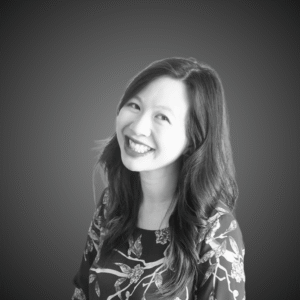
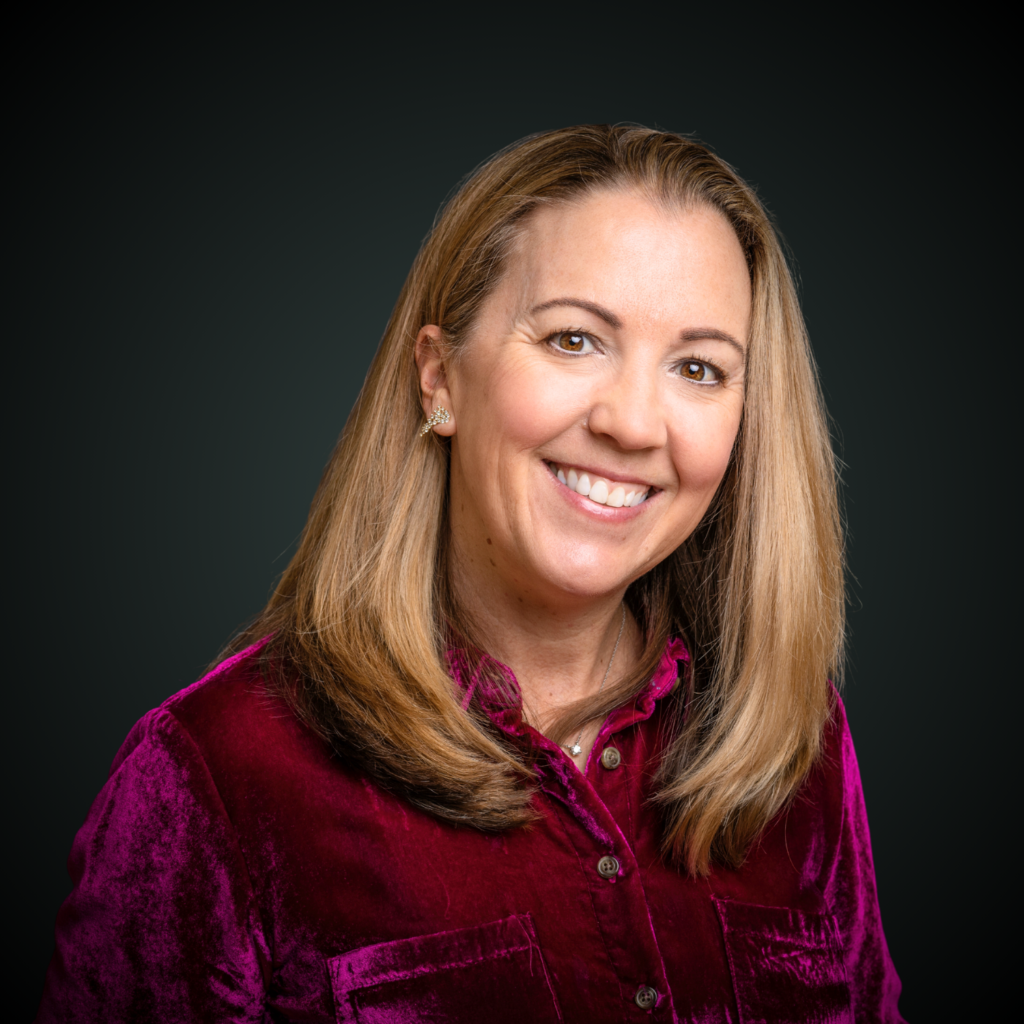
Jane: I’m your host, Jane Healey, and in today’s episode, we welcome number one New York Times bestselling author Elizabeth Lim to discuss her stunning adult debut, Fishbone Cinderella, which Publishers Weekly in a star review called, “Dazzling. A dark and deftly woven adult debut. A gem.” Welcome, Elizabeth.
Elizabeth: Hi, Jane.
Elizabeth: Thank you so much for having me here. I’m really excited to talk with you about Fishbone Cinderella.
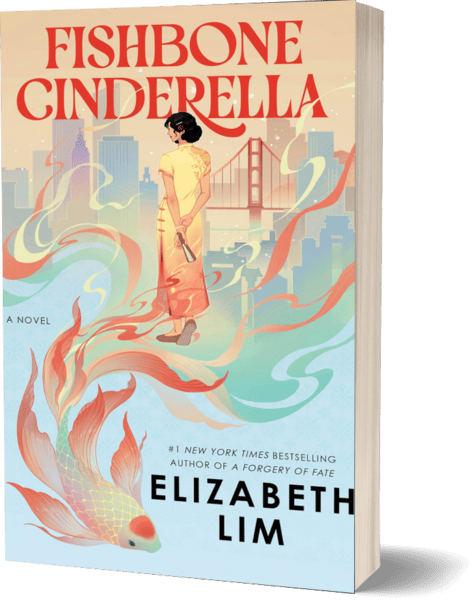
Jane: Yes, I’m so excited, and I, I, I mean, one of my questions is this gorgeous cover, which we will get to, ’cause I, I was like, I got this in the mail and I was, I … My daughter and I gasped. It was so beautiful. So- Isn’t
Elizabeth: that amazing?
Jane: We’ll get to that. Quick bio, Elizabeth Lim is the number one New York Times, Sunday Times, USA Today, and number one indie bestselling author of A Forgery of Fate, The Six Crimson Cranes duology, Her Radiant Curse, and The Blood of Stars duology. She holds degrees from Harvard College and the Juilliard School, and lives in New York City with her husband and daughters.
Jane: Fishbone Cinderella is her adult debut. Again, welcome.
Elizabeth: Thank you.
Jane: Thank you. All right, so this novel follows Yuk Ying, who escapes Japanese soldiers in 19, in the 1940s, who invade her town. And she does this by turning invisible. And it’s al- and then it’s a dual timeline. It’s also about her daughter, Marigold, decades later in San Francisco.
Jane: I love the origin story here, ’cause it’s drawn from your own family history. So talk about that and the premise of this, of this book.
Elizabeth: Yeah, so, I grew up actually living very close to my grandmother, in California. We were just like, a few houses down from each other. Wow. So she would take care of me a lot when I was growing up, and, she would tell me stories about her childhood.
Elizabeth: She grew up in a small village in, in southern China, and the Japanese came during World War II, and she would tell me what it was like living under like their brief occupation. And then, very soon after the war ended, she was sent to live in Hong Kong, and she was under the impression that she was going to get to continue her education.
Elizabeth: She really wanted to learn to read and write, and all of that had been stopped during the war. So her family told her that, you know, there were more, opportunities in Hong Kong for her to get a good education, but they lied. So, they actually s- made her become basically like a maid for her husband, or not her husband, but her father’s second mother.
Elizabeth: Or, I’m sorry, her father’s second wife. Wow. So she became a maid for her step-mother essentially, and she was sent to work in the family’s shoe factory, and this was her life for basically a decade. So she really wanted an out, and she eloped with my grandfather, who was a Chinese American. She moved to America, and, and from there, like the, the rest is history, so.
Jane: Right. Amazing. Yeah. Yeah. And so in your notes, i- i- you said that it took you over a decade to feel ready to write this book. And why did you, like, w- and that you were kind of putting together pieces of it over the years. Why did y- this have to marinate for that long?
Elizabeth: Well, I think it was always in the back of my mind.
Elizabeth: Just listening to my grandma tell her stories, she would always say, you know, “I lived such an interesting life. I, like it would be so great if somebody wrote about it.” And I’ve always had, I, I always like loved listening to her, but it always felt so difficult to me to write a story based on, on somebody else’s life.
Elizabeth: I mean, I come from a fantasy, mostly fantasy background, so it just seemed like a big stretch, and I didn’t feel ready to tell this story that’s so personal, and I, I really wanted to do it justice should I take it on. So I think, again, it was always in the back of my mind, and I just wanted to wait until I was good enough at the craft, to be able to tell it
Jane: Amazing.
Jane: So this is obviously y- y- some of your research came from your grandmother’s real experiences and the stories she told you over the years. But, what was your research process beyond that? And was there anything that surprised you?
Elizabeth: Yeah, so I, like, during my research project, or my research, process, like one of the best, experiences that I had was learning more about post-war Hong Kong.
Elizabeth: I’d gone to Hong Kong like almost every year since I was a kid, and so like I was familiar with the city, but I didn’t know what it was like. So of course, I talked to my grandmother, I talked to some family friends, and did a lot of archival research. And during my research, I actually came across, like, the story about the s- the founder of Vitasoy, which is one of the biggest soy milk companies in the world.
Elizabeth: And I had… I love soy milk, so I already had started thinking about weaving in like a soy milk tycoon into the story. But what I didn’t know was that soy milk actually was one of the great foods that saved Hong Kong during the Japanese occupation. There was a man called Dr. K.S. Lo who was looking for a way to nourish, like the Chinese refugees and people who were in occu- occupied Hong Kong in a cheap and nutritious way.
Elizabeth: And he discovered that soybeans, and soy milk specifically, was a great way to feed everyone. And so he started mass producing soy milk, and this happened during the war, and after the war, he, he built his business. So I was like, “Oh, this is absolutely perfect for, for my book,” and so I really dug deeper into that, and, and that became a, a core part of that, that, in, in that part of the book.
Jane: Isn’t that the best when you find that piece of history that you’re like, “Oh,” like yeah, you just can like pull that into and, and- Yeah … make it part of it. I love that. So this is a mother-daughter story, but it’s also wrapped inside a retelling of a Chinese Cinderella tale. Mm-hmm. There’s an elevent- element of magical realism in it, which I think speaks to your background as a fantasy writer.
Jane: So talk about that aspect of the story.
Elizabeth: Yeah, so, I love fairy tales. I grew up listening to the, Chinese version of Cinderella, and it’s a little bit different because instead of a fairy godmother, you have magical fish bones, and Cinderella essentially, she befriends this magical fish in the stream but when her, her stepmother finds out about it, she kills the fish and eats it for lunch.
Elizabeth: And Cinderella’s absolutely devastated- … as you can imagine. Yeah. But she keeps the fish bones mainly to honor her friend, and she soon finds out that they’re magical, and they’re what grants her like the beautiful gowns, and, like the golden slippers to go to the festival And, how else it diverges from the European version is the ending.
Elizabeth: The ending of the Cinderella in the Chinese Cinderella tends to be more ambiguous, and there’s many different versions of it. So it’s not necessarily happily ever after. It sort of digs deeper into the implications of marrying, like, somebody who only knows her from, like, her beauty or from, like, the richness of her clothing.
Elizabeth: So I thought that was really interesting, and it played really well to the magical realism elements in the book. The magic in Fishbone Cinderella is very light, and it’s very much tied to the generational tension between, Yue Ying, the main character, her own mother, and her daughter. So, in the beginning, Yue Ying can turn invisible, and that’s sort of a metaphor for what it was like for women during that time, during World War II and the early ’50s and ’60s, like, to feel like they weren’t seen.
Jane: Mm-hmm. Yeah, that was beautifully done. And how… Talk about your character development process for Yue Ying and, and her mother, and I- I, like, talk how, a- and has it changed o- over the course of your career in terms of… ‘Cause I’m always interested, like, when I first wrote, w- wrote my first novel, I had, like, character sheets and all these things, and now I kind of feel my way along.
Jane: So, so what’s your character development process like for this story?
Elizabeth: I think having thought about this book for 10 years really, really helped with the character process. I think by the time I started writing them, they just felt like such real people. Like, I get asked a lot why I didn’t write a biography of my grandmother instead of, in- and instead chose to wrote a, write a book inspired by her.
Elizabeth: I think this ties in with that question a lot in the sense that I wanted to have the freedom to create my own character, to not really be tied to exactly the same choices that my grandmother made, and to just have someone, that I can grow along with as I tell their story. And I think it was really fun to work with Y- Ying, for instance, and to just really dig into her, her mind, and just really get to know her over the years.
Elizabeth: ‘Cause a lot of not so happy things happened to her in, in the book, but it’s not so much about her being a victim of the times, it’s more about her, persevering and just being resilient, and that’s always something that I admired about my grandmother and wanted to transfer into this character.
Jane: Mm. I was thinking, what has been your family’s reaction to this book, given that, that it’s such a personal history?
Elizabeth: I think they’re really proud. I think they’re happy. It’s been difficult to really gauge my grandma’s reaction because the book’s not translated into Chinese. Ah So she hasn’t been able to read it, but I did send her a copy and, I did show her pictures of it being, like, seen at, at bookstores, and I think it was very meaningful for her.
Jane: Yeah … yeah Amazing. Amazing that she’s alive and can still, like, you know, and can experience that. Like, what a gift that is, you know?
Elizabeth: Yeah. It’s s-
Jane: I
Elizabeth: think she’s pretty happy.
Jane: Yeah, absolutely. I, I, so, and I, I do, before I, I have a bunch of writing questions as well, but, this cover is gorgeous. People will see it on the podcast.
Jane: If not, you can look it up, Fishbone Cinderella. Did you have a say in it? I, I also, I’m gonna, even in the inside artwork and then the family detail, like, the, it’s so gorgeous and my h- my daughter and I, like I said, we were just kind of b- like leafing through and, did you have a lot of say in the design of the cover?
Elizabeth: I did. I wouldn’t say that I had a, a lot of say. I strongly stated my preference to have an illustrated cover, and I, I mentioned it’d be nice to have, like, the Golden Gate Bridge and a fish. I feel like those were the big things that I asked for. But- Mm … I was so, so happy with how it turned out.
Elizabeth: Lilith Wang is the artist. Wow. And she just did a fantastic job just bringing toget- bringing forth the sort of, like, magic in the book, but also the his- history and the fairytale. So I think it just conveys everything I wanted to.
Jane: Beautiful. Beautiful. The color palette is beautiful. Yeah, just love it.
Jane: Was it always, was the title always Fishbone Cinderella?
Elizabeth: It was when I went on sub, but before that, I’m really terrible with titles. I had such horrible ones that- Like, my very first title, my very first working title was Purple Myrtle, just because, like, there was like a line in the book that talked about flowers, and my agent was like, “No.”
Elizabeth: Like, absolutely
Jane: not. I’ve, I’ve been there, yeah. I, I, I try, and I’m like, they’re always like, “No.” I think- Yeah.
Elizabeth: Yeah, I think it’s so hard. It’s, it’s usually like the last thing that comes to me, ’cause I just put it off.
Jane: Yeah, it’s really hard. I think titles are very hard. Titles and covers, but titles especially.
Jane: And they’re like, yeah, I’m like, the last three books, they’ve all been like, “Nope, nope, nope.” Sales and marketing have been like, “Here’s your title. Hope you like it” Like, like, all right, whatever sells the book, I guess, so. So what, some writing questions, what is your writing process like? I always ask authors who come on, are they a plotter?
Jane: Do you s- do you plot things out? Do you write by the seat of your pants? Is it somewhere in between? What’s your process?
Elizabeth: I think I’ve become more of a plotter, as I’ve grown more experienced as a writer, but I feel like that doesn’t always work. I think you do need to have, at least for me, I do need to have some sort of, like- excitement in the, in the process where I don’t really know where I’m going.
Elizabeth: Like, I need to have a little bit of that thrill and, like, passion for the, the project. And I find for me that usually comes from the unknown. Mm-hmm. And also just literally having the voice of the characters in my head before I really try to go anywhere.
Jane: Yeah. Definitely. So I was thinking too about structure.
Jane: I’m always fascinated with structure. Did you always intend to write this structurally the way, the way it turned out across two braided timelines 40 years apart, or did that structure evolve with your writing process?
Elizabeth: So the structure, I’d always, always had two timelines, but I initially didn’t have the, the sort of interludes with Marigold in the beginning, like the plane ride.
Elizabeth: So I wanted to capture that. I, I ended up restructuring the book to capture that just so that it would feel slightly more balanced between mother and daughter, because initially it was just, chronological.
Jane: Mm-hmm.
Elizabeth: Yeah.
Jane: Very interesting. What have you learned about balancing historical fact versus fiction versus fantasy?
Jane: Like, how… Especially where this is such a personal history story, like, how did you, how did you navigate that?
Elizabeth: That’s a good question. I think having the fairytale sort of work as a framework, like I always knew that I wanted to have the Chinese Cinderella sort of be a backbone for this story. And while this isn’t a retelling and the fairytale sort of runs parallel with Yu Ying’s story rather than, like, inspiring it, I think that, without spoilers, the way that the fairytale comes back in the end and you sort of understand why the women are cursed, how they were cursed, and what the curse means, was always something that I knew would happen at the end and sort of be this revelation that ends up bonding the three women.
Elizabeth: And I think that really helped with the fantasy elements and also, like, makes the history come together.
Jane: Yeah, I, I, yeah, and I w- I mean, it’s, it’s interesting because, I love magical realism, and I think that, like, I, I love … I, I have never written it myself, and I’m, I’m so always in awe when people can, can do, can bring these threads in and, and it, it just works so well.
Jane: So yeah, I was interested to see about, you know, your pr- your thought process along the, along those lines. In terms of the writing process, what part do you enjoy most, and what’s the most challenging for you?
Elizabeth: I think the challenging is always the first draft for me, just because there’s so much doubt, and I think you’re not fully immersed in the project yet because you can always step back and just decide to shelve it.
Elizabeth: I think, like, the hardest part is gaining that belief in the project that, that it’s worth pursuing, and that it’s a story that I want to tell. I think there were a lot of, for instance, a lot of false starts for me with Fishbone Cinderella. Like, that’s why it took so long for me to write it, just because I was like, “Oh,” like, “I have this story that I want to tell,” but I didn’t quite know how to go about it.
Elizabeth: Like, initially I didn’t even know that there would be magical realism. I didn’t know that there would be two timelines. And I think that just needs, for me, it just needs time, and it just needs the determination to want to tell this story
Jane: Yeah, I, I think about that with the first draft too. I… And I think a lot of authors are, are…
Jane: You know, having talked to a lot of authors over the years, that first draft is hard for a lot of us, and I think part of it is, like, so many choices. Right. And like so many choices, and also, like, you could say, “Well, I don’t even need to… I, I can do something else. I don’t need to write this one.” Like, I can do…
Jane: Right? Like, before you truly commit to it, which is really… Yeah, it’s a whole, like, mental game, I think. So you, you wrote s- I read that you wrote and polished several manuscripts before your debut, Spin the Dawn, was published. What has surprised you most about your writing life since then, you know, y- and, a- and kind of your whole career, including becoming a number one New- New York Times bestselling author, which is amazing.
Jane: Congratulations on that.
Elizabeth: Thanks. I mean, I think honestly, I didn’t expect to become an author. Like, writing, when I grew up, I was a very serious musician, so that was really my passion, and it was really what I dedicated my, my youth to. I was just like, “I wanna be a composer. I wanna write music for films and video games.”
Elizabeth: That was, like, my huge passion, and I really discovered writing through music, actually. I wrote a lot of fan fiction because I was like, “I really need to understand narrative if I’m gonna write music for films.” And so that was sort of, like, my hobby. Writing was my hobby. And from writing fan fiction, and I posted it, I would post it online, people would read it, and they would write back to me, and they weren’t always kind.
Elizabeth: So, like- … they’d be like, “Oh, you could have done this better,” or, “You could have done that better.” And I was like, “Wow, it’s really, really stressful being a writer.” Like, it’s, you, it’s… Bad reviews really hurt. Yeah. So I was like, “I don’t think I could ever do this.” So, so yeah, I, and I, and I didn’t. I mean, I went to college.
Elizabeth: I didn’t… I took creative writing my senior year just for fun, and I had, like, absolutely no intention of pursuing publishing. But then I found when I was in grad school for music, I, like, started writing again as a hobby, and this time I found, like, I really enjoyed it. And I was spending so much time in it, I thought, you know, “Maybe I should try to get published.”
Elizabeth: And with each rejection that I got from there, I was like, “Okay, you know, I can do this. You know, if I just keep working on this craft and if I keep getting better and improving, eventually those rejections are gonna turn into a yes.” And I, and that, for some reason, maybe it was, like, very masochistic, but I just really, like, this became my obsession, and I was just like, “I’m going to be able to do this at some point.”
Jane: Right. Right. Yeah. I, I talked to an author yesterday, Lila Sage, and she’s like, “It was almost out of spite. Like, with every rejection- … I’m like, no, I’m gonna, I’m gonna, this is gonna happen for me.”
Elizabeth: You know? So- Very similar. Yeah.
Jane: Yeah, yeah. Totally. S- to, on that note, like, what advice do you have, this is a two-part question, for writers about writing and about getting published?
Elizabeth: I’d say, you know, related to the, whole wanting to get to the yes, like a lot of, a lot of getting published is about who doesn’t give up, right? I think obviously your first book that you write, it’s not going to be… It’s not very likely that your first book will get published. I think I like, I…
Elizabeth: When I look back now at the very first book I wrote, I’m just like, “Oh my God, I’m so glad that it didn’t get published.”
Jane: Yeah. I have one of those too. Yeah.
Elizabeth: Yeah. But that’s also, that’s great because when you look back at it, you can see how much you’ve grown as a writer. But I think when you’re in the moment and you’ve just spent like so many thousands of hours on this project, it’s really hard to divorce yourself from like thinking this is the best thing that you’re ever going to write.
Elizabeth: And so I think that, you know, just like be kind with yourself and give, and be patient, and I think, it’s hard, especially these days with social media not to compare yourself to people who are, who are like getting book deals and like getting these major deals. But if you can, just step back and like focus on your own work and, and your own timeline.
Elizabeth: So I think that’s advice that’s really healthy.
Jane: Okay.
Elizabeth: And yeah, and I think… Sorry, what was the other question?
Jane: Oh, no, and then about, a- about, like advice for about getting published, ab- a- about writing and about getting published. Yeah. So, yeah, so I mean I, I completely agree. I feel like w- publishing is perseverance, right?
Jane: Yeah. Like, like, yeah, every… I, I, you know, I always say like, “If you take yourself out of the game, then, you know, then you’ll definitely not get published,” right? But if you keep pushing when everyone else has given up, then that’s, yeah, that is very, very good advice. But, in, in terms about like writing and learning craft, what, what advice do you have there?
Elizabeth: I mean, I think it’s really important to read a lot obviously- Mm-hmm, yeah … and read in different genres. But I also think it’s really important to like- To read things that don’t quite work in your mind. I remember when I was first starting out, like, I would take some books that I didn’t enjoy and, and try to understand why I didn’t enjoy them- Mm-hmm
Elizabeth: and like, what didn’t work. And, I think that’s just as important as, like, reading books that you love because-
Jane: Mm-hmm …
Elizabeth: it just like makes you understand what makes a good story, and what, why… My golden rule as a writer has always been to write what I want to read.
Jane: Mm-hmm. And
Elizabeth: I think that helps you just, like, understand, sort of like working backwards.
Elizabeth: Like, understand how to write a book that you would wanna read.
Jane: Yeah. I, I completely agree. I, one question I didn’t ask earlier, and I’m, I’m always curious to, do you use, Microsoft Word? Do you use Scrivener? Like, what, what do you use to write in?
Elizabeth: I just wr- write with Word.
Jane: Yeah, yeah. Yeah. I think it’s bas- basically Word or Scrivener.
Jane: Some people say Google Docs now, but, Mm-hmm … I don’t know. That just scares me ’cause it’s kind of out there
Elizabeth: Oh, yeah.
Jane: That’s true … on the cloud, yeah. Are you ready to share anything about what you’re working on next or now?
Elizabeth: Yeah. So I’m going back to fantasy with my next projects. I’m, I’m excited to, to talk more about them, but the, the next one at least is going to be back to young adult fantasy.
Elizabeth: And, and it might be in a world that’s familiar to some people, so… I, I can’t announce anything yet, ’cause-
Jane: Oh, exciting. Oh, that’s great. Congratulations. Thank you. That’s amazing. What is the best way for readers to stay in touch with you?
Elizabeth: So you can find me on my website, which is elizabethlim.com. It’s my name.
Elizabeth: Okay. And then, I’m also on Instagram, which is elimpix, so kind of a play on Ol- the Olympics. But it’s E-L-I-M-P-I-X.
Jane: Cute. Nice. Yeah. Okay. And that’s a wrap. Elizabeth, it was l- so lovely to meet you. Thank you again for being a guest. And congratulations on your latest and your adult debut. Thank you.
Jane: Again, it’s Fishbone Cinderella, available wherever books are sold. My latest novel is The Women of Arlington Hall, and I’ll have more about book six soon. Please remember to subscribe to my YouTube channel or follow me wherever you listen to podcasts. Thanks again, Elizabeth, and thanks for everyone for listening.